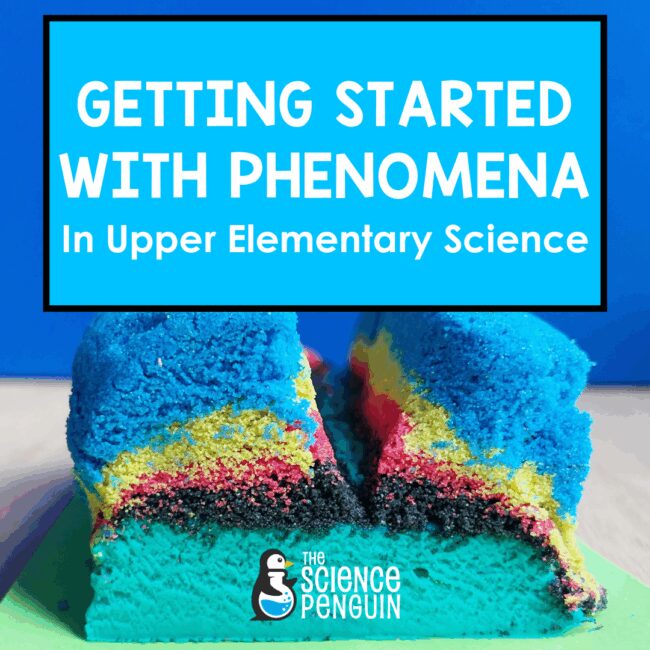
Getting Started with Phenomena-based Science in 3rd, 4th, and 5th Grade
Let’s take a look at using phenomena in upper elementary science, particularly 3rd, 4th, and 5th grade!
Watch and Learn with Mini PD
In just 7 minutes, Holly explains how we use phenomena through the 5E model and CER in 3rd-5th grade.
All About Phenomena
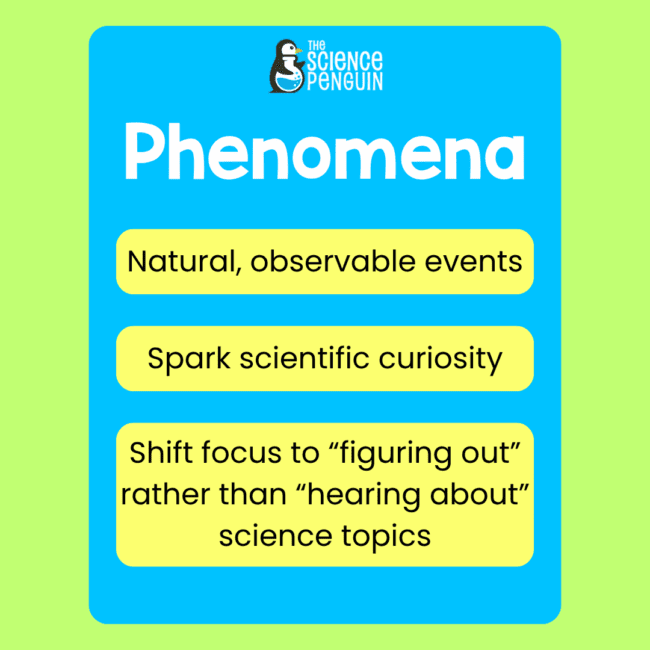
So, you may be wondering…. what is a phenomenon? Well, generally speaking, phenomena are natural, observable events. They are the things in our world that make you say, “Hmmm, what is that about? Why does that happen?”.
When you teach with phenomena as the basis for learning, that helps to spark scientific curiosity. We all know students love to wonder how and why things work. When you allow phenomena to be the backbone of your science classroom, the focus is shifted to “figuring things out” rather than just “learning about” a topic.
Students own the content because they are part of the process, rather than being spectators.
Phenomena + 5E Model
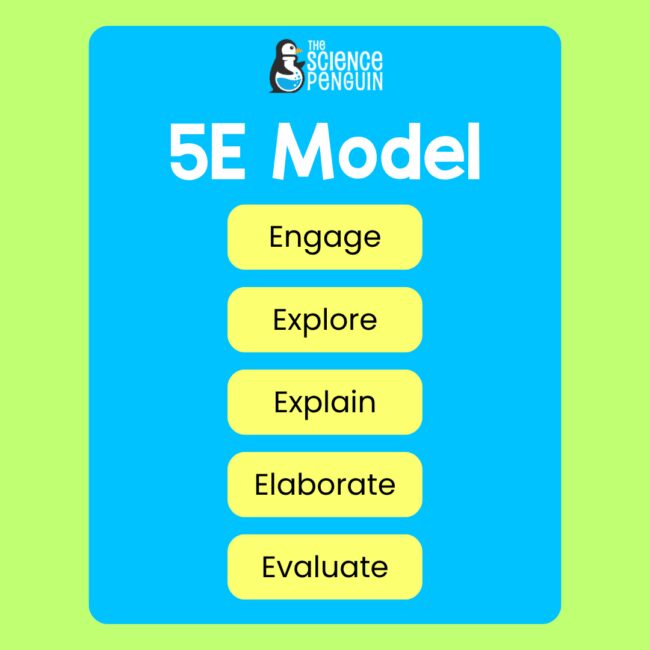
You may have heard of the 5E model in science education. It’s a heavily researched model of instruction in which scientific concepts are organized and sequenced for maximum understanding. Think of it as a delivery model in which we help students understand scientific phenomena.
It is divided into five stages, and all of our units follow these in order. First, engage is like the “hook stage,” where we get the students interested in the phenomenon. This usually includes a video and small investigation or demonstration, along with students identifying questions they may have.
Next, the Explore stage helps them to investigate ideas, objects, or situations. They are getting their toes wet with the concepts and developing their understanding.
Explain is the section where we solidify the needed information. We usually include vocabulary study in this section, along with a passage to read and comprehend, and often there is a notebook-related activity in the area as well. This is a more traditional step in the sequence to ensure that the content is understood by all.
Elaboration is the next step of the model, and it allows students to apply and extend their new knowledge in a hands-on scenario that usually involves some type of experiment, investigation, or model.
After that is Evaluate, where students sum up their understanding to show what they know. For science penguin units, this includes a CER, quiz, and open response.
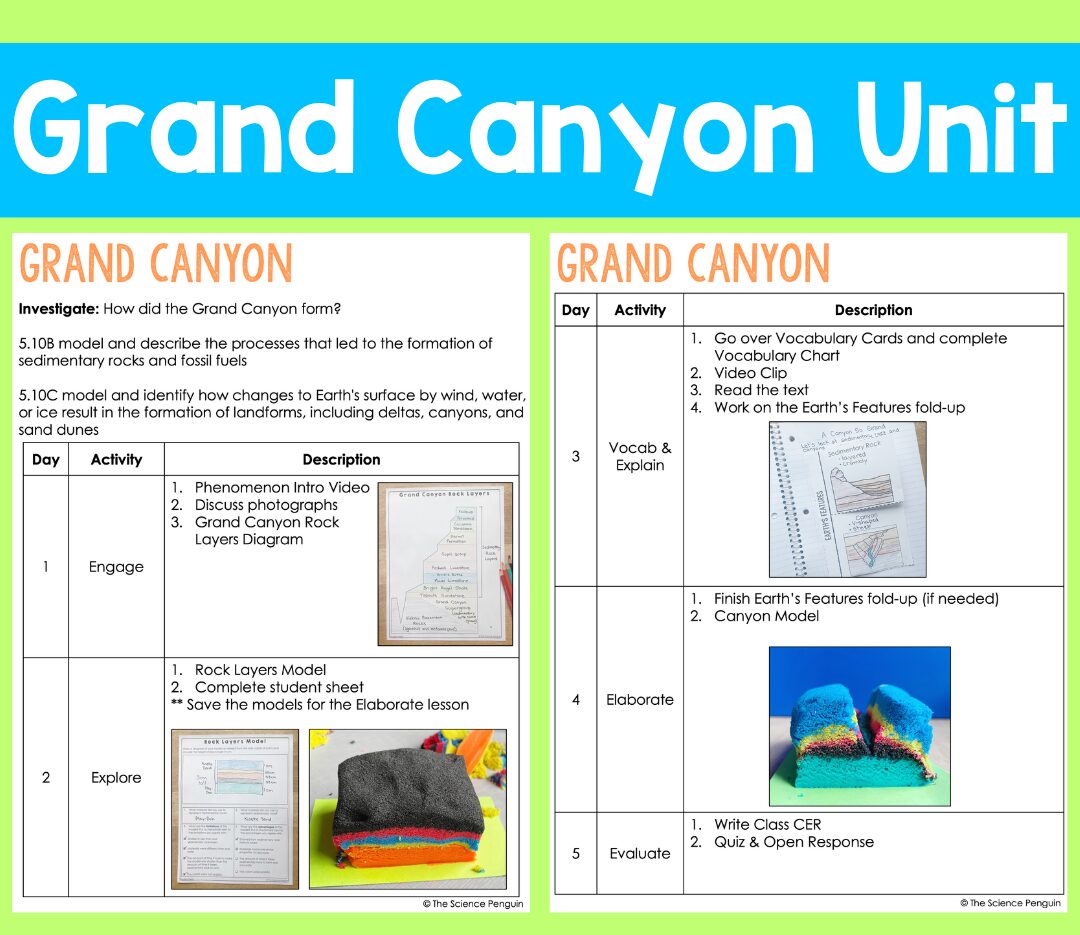
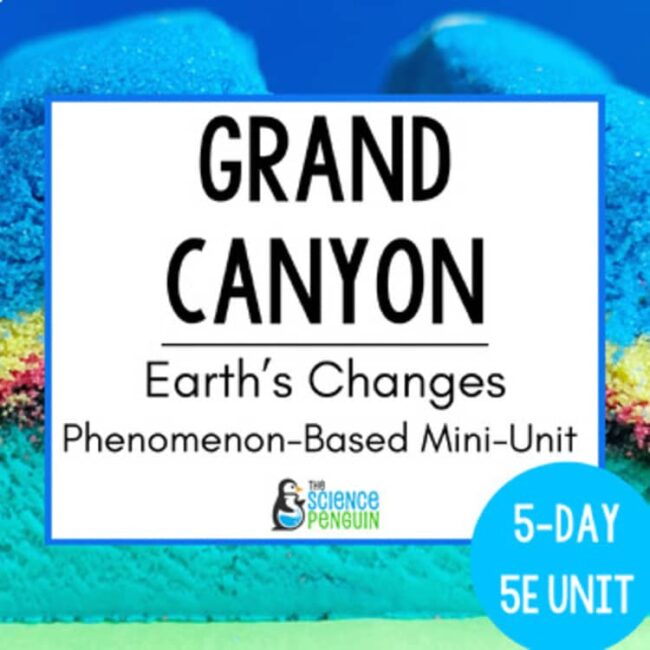
Grand Canyon Example
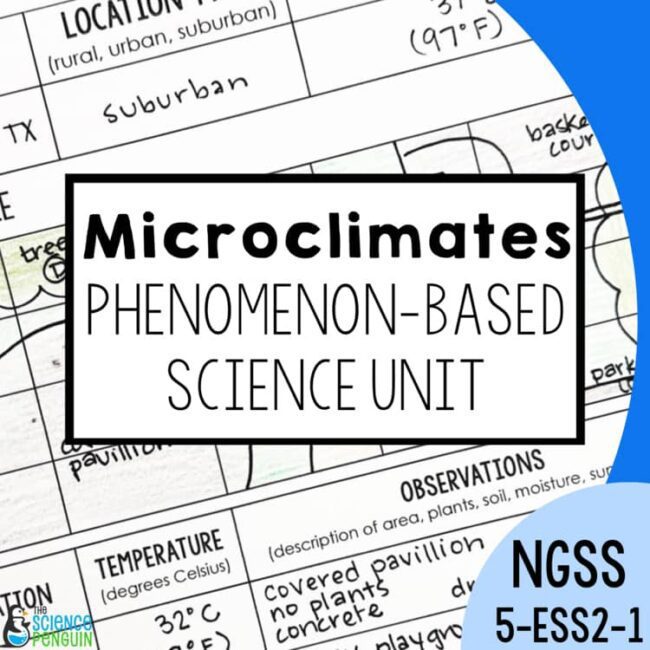
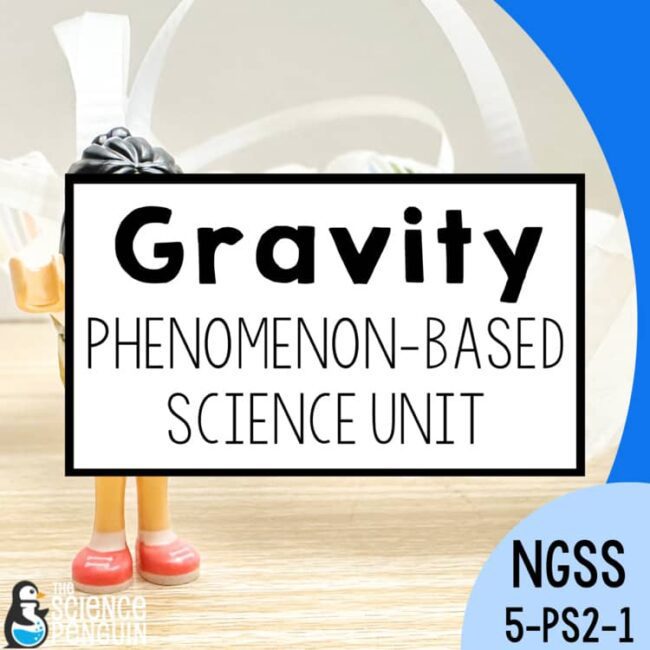
We include a schedule so you know exactly what unit parts to complete each day. There are descriptions and images of the materials to guide you as you look through the unit. So when using a science penguin phenomena-based unit, your lesson plans are already done!
We walk you through each step in the video at the beginning of the post. Be sure to watch the video!