The water cycle is the process by which water evaporates from the Earth’s surface, rises into the atmosphere, and falls back down to the surface as precipitation.
In this post, we explore 7 fun and engaging ideas for teaching kids about the water cycle. From hands-on investigations and activities to stations and task cards, these ideas will help kids learn about the water cycle in a meaningful and interactive way.
1. Observe a Water Cycle Baggie
This idea is an oldie, but a goodie.
It’s important for students to understand how the Sun and ocean interact in the water cycle. Water at the surface of the ocean evaporates and rises due to energy from the Sun. It becomes water vapor.
As the water vapor cools during condensation into liquid water, it gathers together in clouds. Then the liquid water falls as precipitation.
What to Do
1. Draw the water cycle carefully on a baggie using a Sharpie. Don’t push too hard or your bag might rip!
Include the sun, a cloud, and the ocean. Also write the processes.
2. When you’re done writing, add some water to the bag, seal it shut, and tape it to the window.
3. Observe your water cycle baggie for a few days. You’ll see the evaporation and condensation right before your very eyes!
4. Be sure to have students record their observations and draw their water cycle baggies in their science notebooks!
2. Flip with a Water Cycle Flipbook
Need a NO PREP science review activity? Make a flip book to review the water cycle!
This flip book is easy to assemble and fun to create with students as they wrap up their learning.
Accompany this activity with a video from our friend at Mad Garden Science on YouTube.
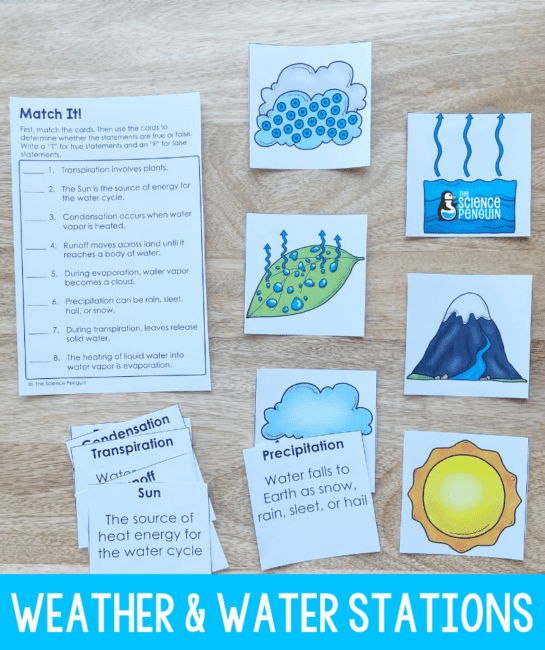
Study the water cycle alongside weather and climate with 9 easy prep station activities. This is a particularly great option if you’re short on time during your weather and water unit!
5. Dive Deep with the Clouds Phenomena-based Science Unit
Teach your students the details of cloud formation and how clouds can help us predict the weather with this full unit!
You’ll use a cloud window to observe the weather each day, make predictions about the weather based on cloud types, support a claim with evidence and reasoning, and even make a cloud in a jar!
6. Roll the Dice with a Water Cycle Cube Simulation
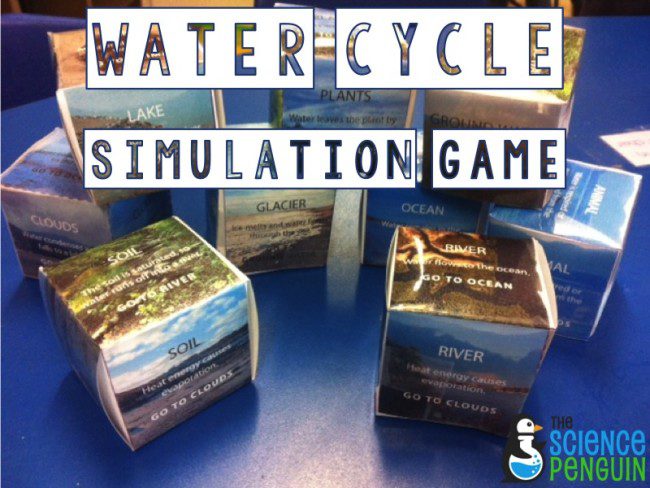
This activity is a simulation game in which students move through the water cycle as a drop of water. The activity I used is no longer available but you can find something similar here.
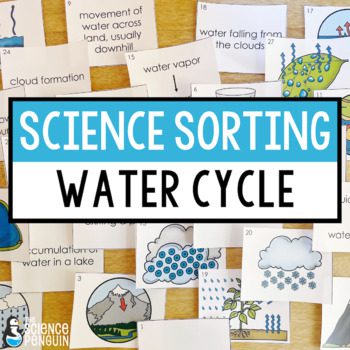
6. Assess with Water Cycle Task Cards
When it’s time to check for understanding, you’ll want to have some task cards on hand. I use two different sets– one for vocabulary and one with more rigorous questions for test prep.
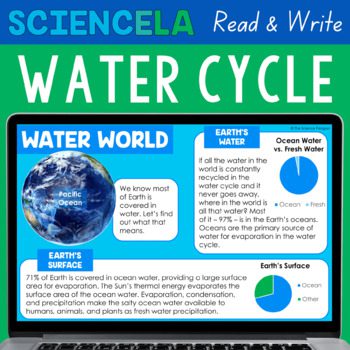
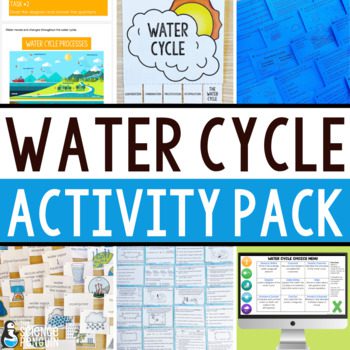
Use as enrichment! This digital choice board is perfect for advanced students who crave new learning and want to dive a little deeper into the topic of study.
5 thoughts on “7 Amazing Ideas for Teaching the Water Cycle”
Thanks for sharing these great ideas! I always like to follow up my version of the water cycle simulation by having my students (2nd grade) create a comic strip that follows their “journey” as they share these stories they see the patterns. I love teaching the water cycle, so many great experiences!
Love the comic strip!
Thanks for sharing the Ocean Notebook freebie!
Love the Water Cycle simulation cubes idea, but where do you find the cubes?









5 thoughts on “7 Amazing Ideas for Teaching the Water Cycle”
Thanks for sharing these great ideas! I always like to follow up my version of the water cycle simulation by having my students (2nd grade) create a comic strip that follows their “journey” as they share these stories they see the patterns. I love teaching the water cycle, so many great experiences!
Love the comic strip!
Thanks for sharing the Ocean Notebook freebie!
Love the Water Cycle simulation cubes idea, but where do you find the cubes?
Comments are closed.