Interpreting food webs can be overwhelming for many students. Over the years, I found a few strategies that work well with students needing extra assistance and I’d love to share them with you!
Now it’s no secret that food webs is one of my favorite science topics, so I have A LOT of strategies and activities you can choose from!
What is a food web?
A food web is not merely about who eats whom; it shows how organisms are connected and how energy moves.
Now, before we go any further, let’s get some vocabulary.
-
Food Chain: the simplest pathway that energy takes in an ecosystem. It starts with a producer (like a plant) and ends with a top-level consumer (like a human)
-
Food Web: a complex network of multiple food chains, interlinked to show who could potentially eat whom in an ecosystem
-
Decomposer: organisms like fungi and bacteria that break down dead matter into simpler substances, making them available for plants to use
-
Producer: organisms that produce their own food through photosynthesis and serve as the base of the food chain
-
Consumer: creatures that can’t make their own food and must eat to gain their energy.
Standards
TEKS 4.12B describe the cycling of matter and flow of energy through food webs, including the roles of the Sun, producers, consumers, and decomposers
TEKS 5.12B predict how changes in the ecosystem affect the cycling of matter and flow of energy in a food web
NGSS 5-PS3-1 Use models to describe that that energy in animals’ food (used for body repair, growth, motion, and to maintain body warmth) was once energy from the sun
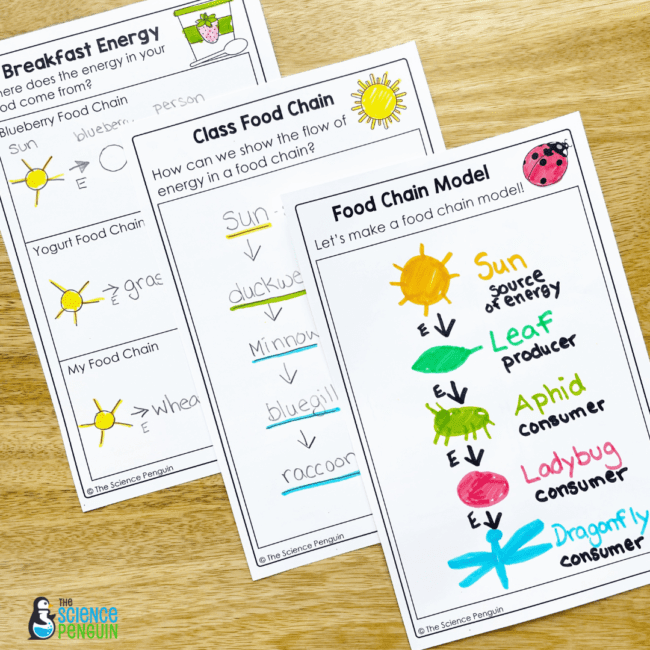
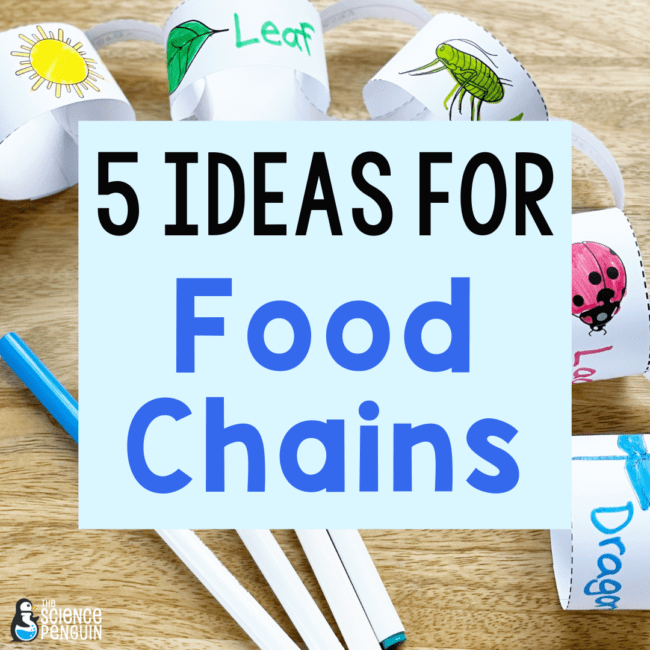
1. Back to the Basics with Food Chains
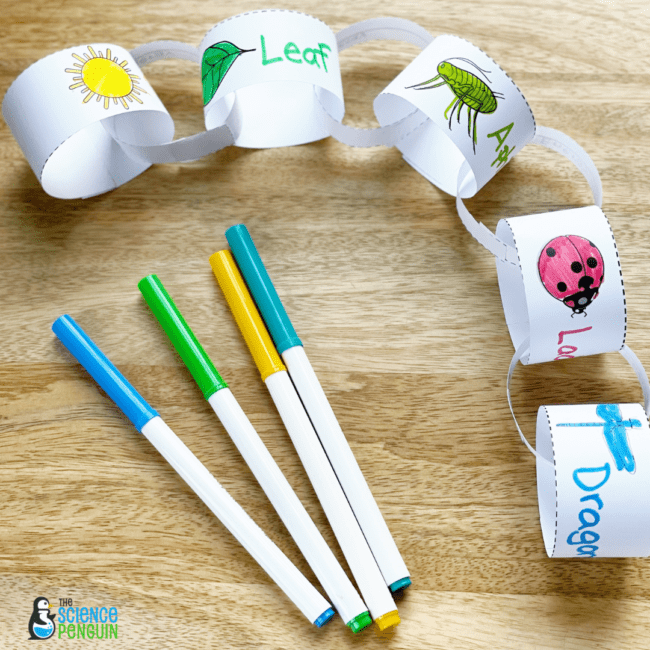
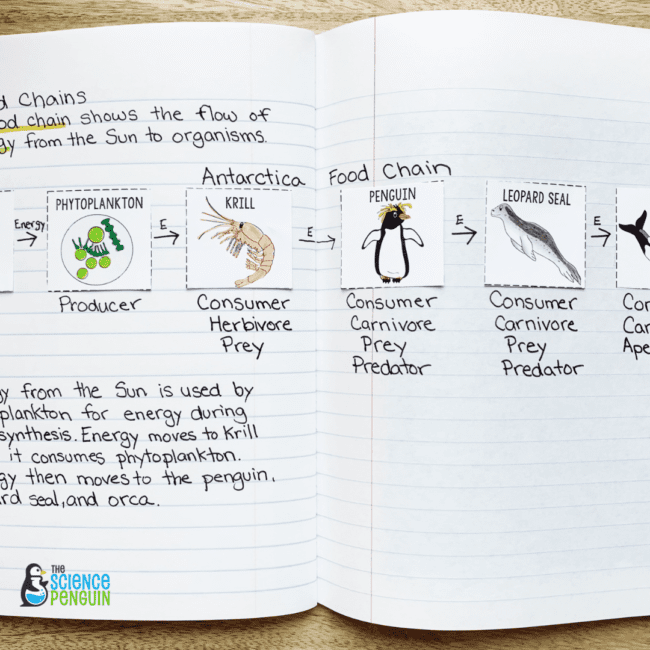
Before students can understand food webs, they need to understand food chains and that the arrows represent the path of energy.
Check out our Food Chains Labs in a Snap if students need a review.
This isn’t your average food chains worksheet. Students complete low-prep, hands-on activities and record what they learned on the student sheet.
See it on TPT: Food Chains Labs in a Snap
2. Walk Through a Food Web
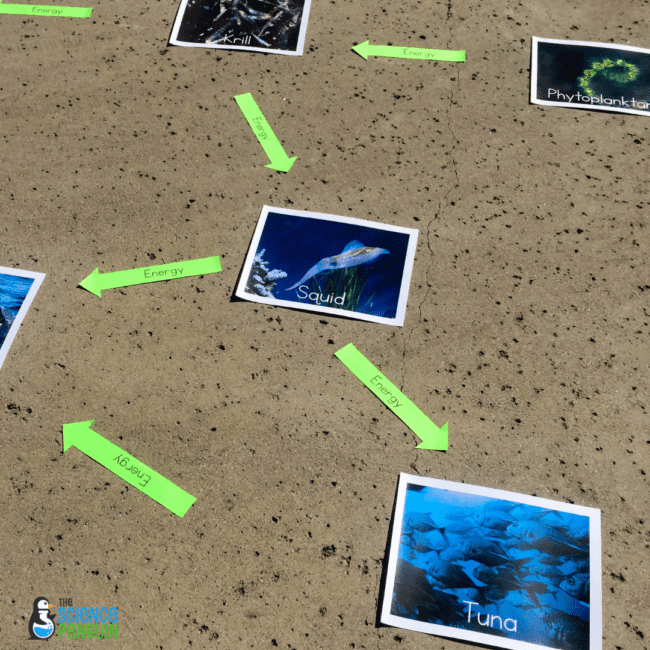
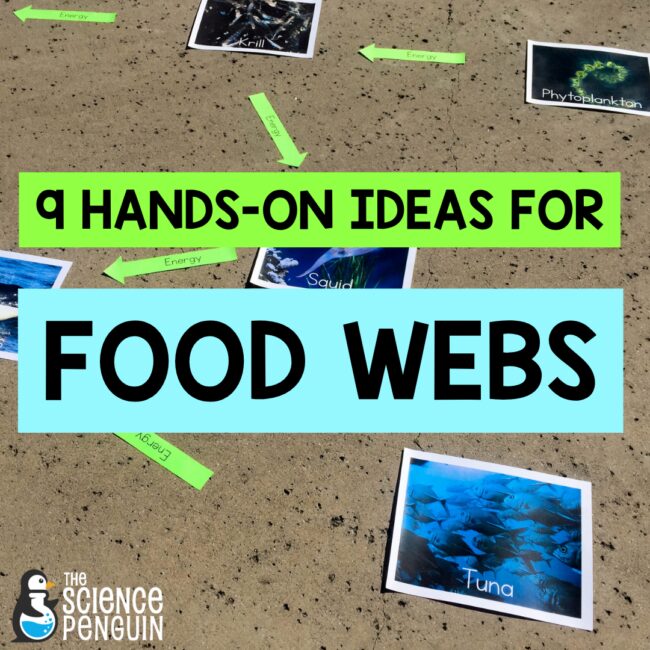
Students actually MOVE through a food web and see how energy flows. It’s important to know that food webs show how energy flows, not who eats what.
Students each represent a unit of energy. Where did they come from before arriving at the phytoplankton? Allow students to take any path they choose as long as they follow the arrows. Along the way, students record where they went. Then, students write about how energy was transferred.
Get the Walking Food Web Activity for free!
Sign up using your personal email so I don’t get stuck in a district email filter. You’ll have access to the Walking Food Web and 40+ more science resources!
3. Make a Food Web with Snacks
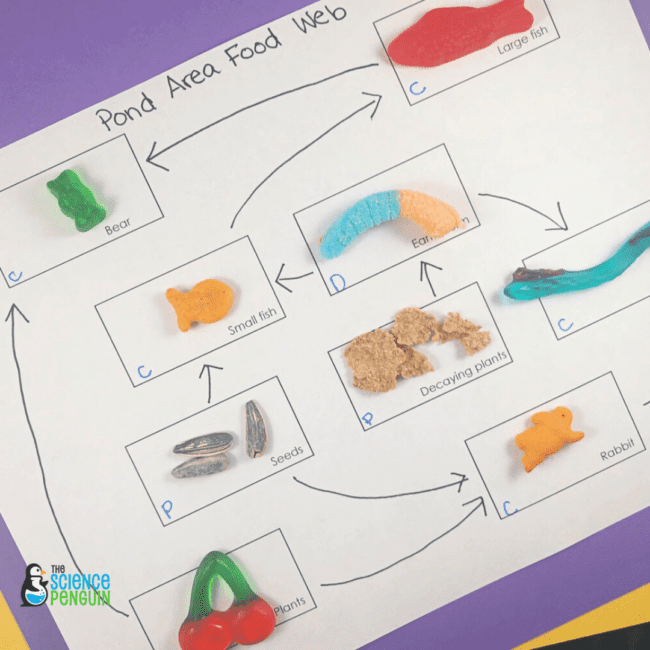
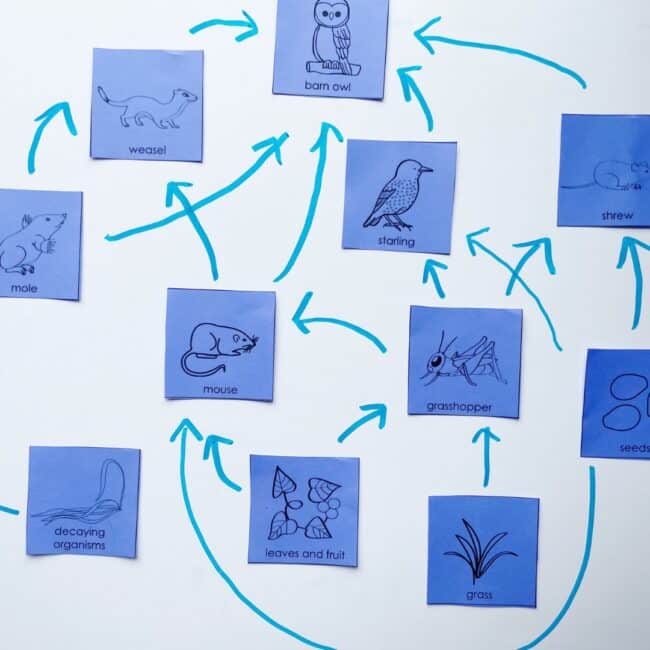
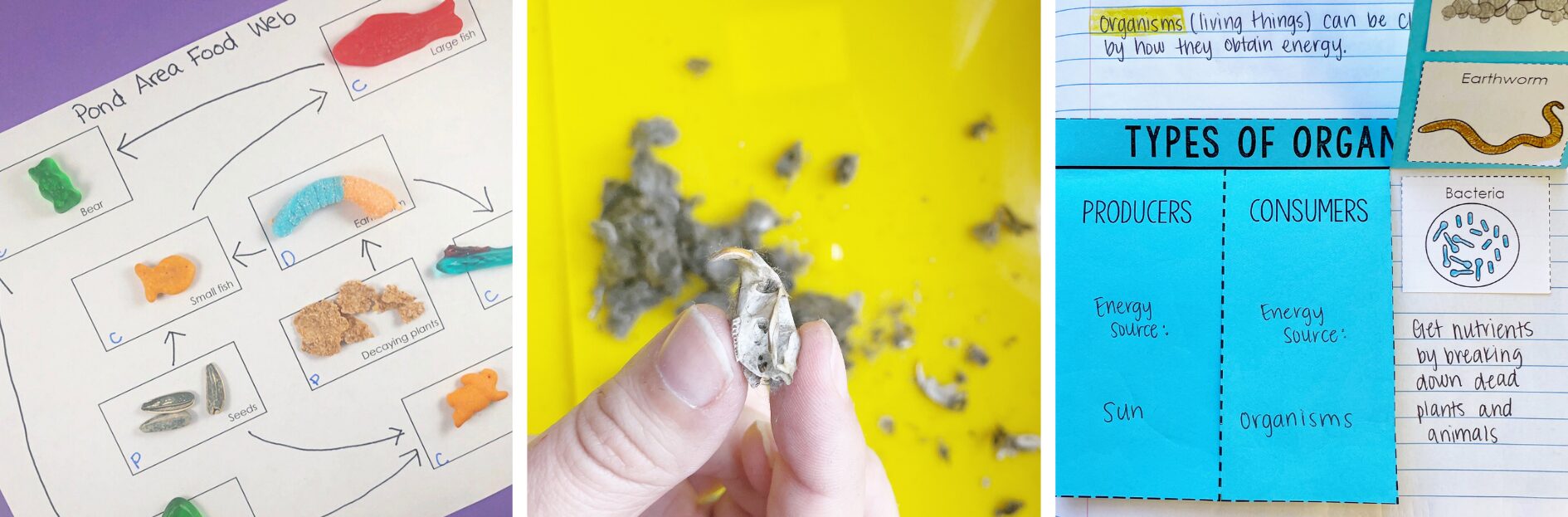
This was such a fun activity to engage students! Students placed the corresponding snack food in the box on the printable. Then, we drew arrows to show how energy moved through the food web. Then, we labeled everything as P for producer, C for consumer, or D for decomposer. This is such an important step before interpreting a food web. Here are some ideas to extend the activity and increase the rigor.
Ideas to Extend:
- List all of the organisms that consume producers.
- List all of the organisms that eat consumers.
- Make a table of consumers, producers, and decomposers.
- Classify consumers as herbivores, carnivores, or omnivores.
- Make individual food chains using the organisms from the food web.
- Describe the flow of energy.
- Predict how changes to one species will impact the rest of the food web.
Get it for free!
Sign up using your personal email so I don’t get stuck in a district email filter. You’ll have access to the Walking Food Web and 40+ more science resources!
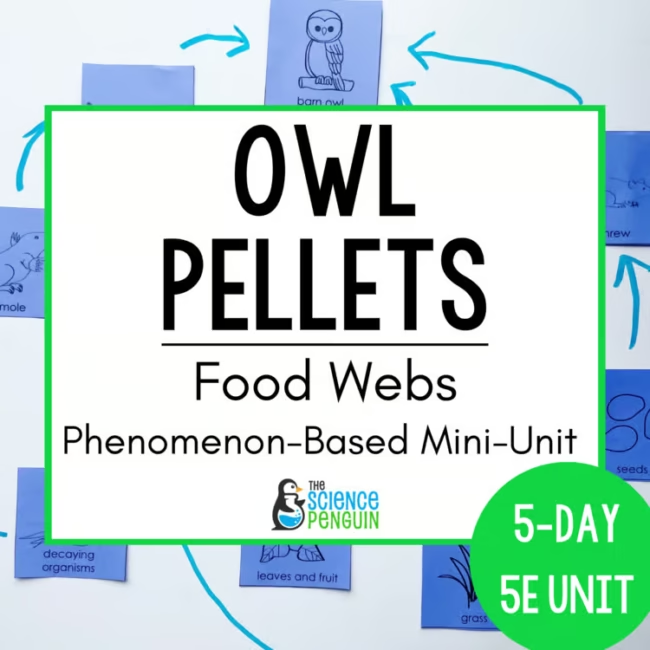
4. Dissect an Owl Pellet
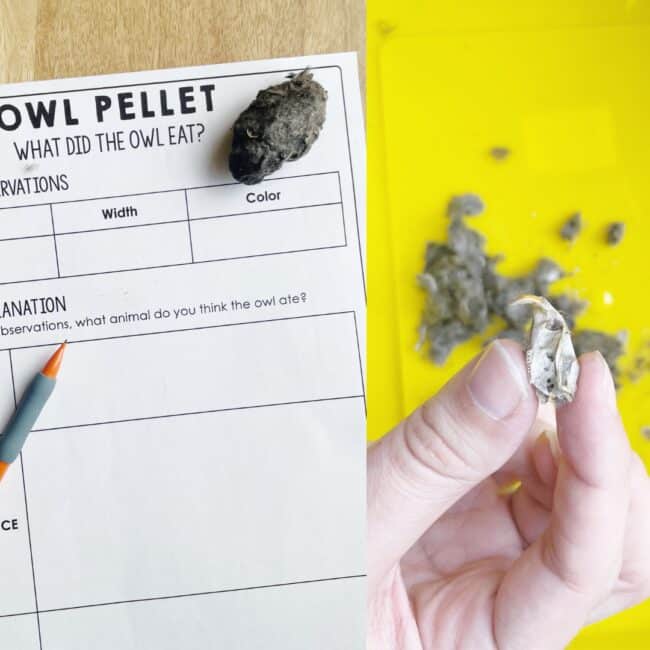
Dissecting an owl pellet is my favorite way to introduce food chains and food webs. In this unit, we take it even further. I think you’ll love it!
Includes 5 days of 45-minute lessons:
- Engage: Phenomenon video and Predator and Prey game
- Explore: Owl pellet dissection lab and claim about the owl’s prey
- Vocabulary: Vocabulary posters and student page
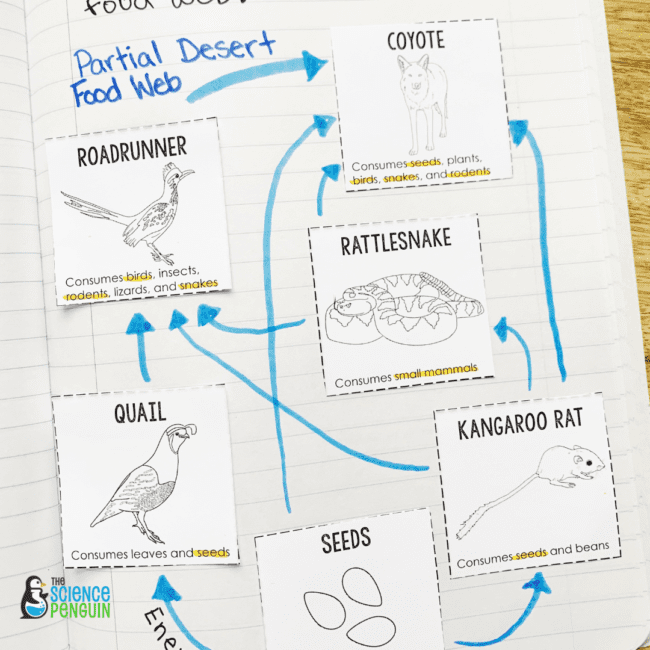
- Explain: Read the text together and complete the food web in notebooks
- Elaborate: Complete the cut-and-paste food webs team challenge
- Evaluate: Food web analysis
- Assess: 5-question multiple choice quiz and open response prompt
“My students always love this dissection. This bundle helped me to be more organized.” -Kelsey
See it on TPT: Owls Science Unit
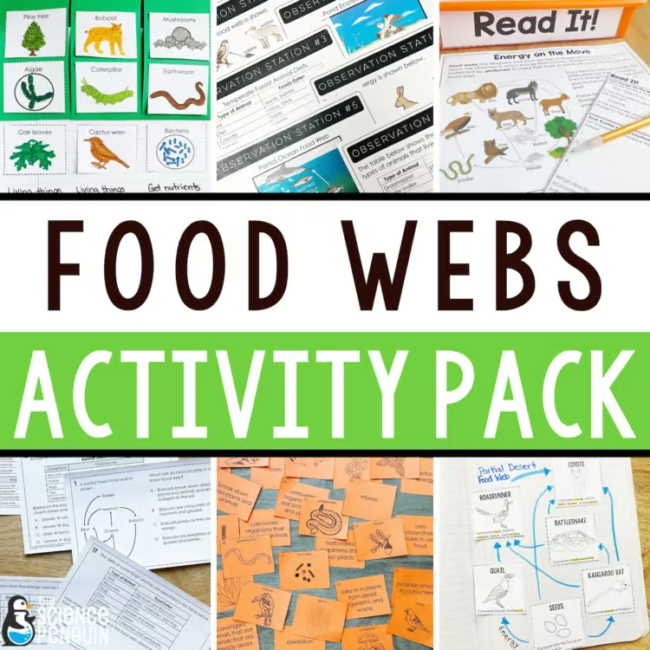
5. Food Webs Observation Stations
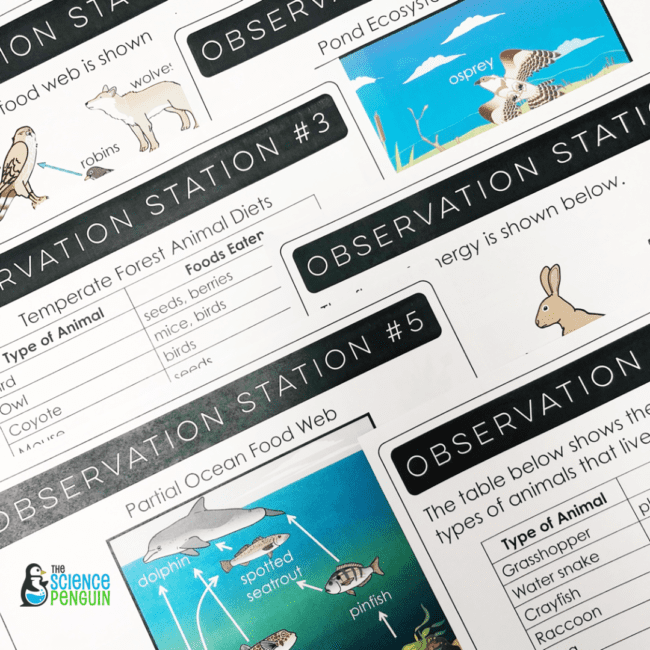
Yes, yes, yes! The class period I spend on this activity is a game-changer. The student recording sheets ask students to analyze roles, make predictions, form individual food chains from the food web, describe energy flow, and identify direct transfers of energy. I used language similar to what students will see on 5th Grade Science STAAR.
“Very engaging ~ made my students think and problem solve especially when the food web was not pictured and they had to use the chart!” -Tina F
“I loved this and so did my students! I printed the observation stations in a large paper and taped them around my room. Students were split in groups and walked around the room. I LOVED seeing how they engaged within their group discussing their answers before writing them down. It really got them thinking! My class is not the best when it comes to group work but this was an absolute win!” -Karla F
See it on TPT: Food Webs Observation Stations
6. Take Notes in Your Interactive Science Notebook
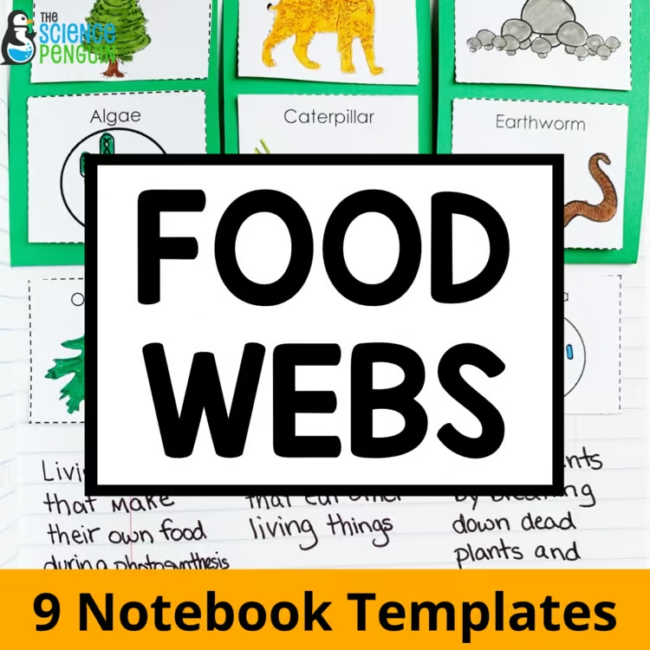
If you need some quick but rigorous printables to use in science notebooks, I’ve got you covered with Food Chains and Food Webs Notebook Templates.
Let’s journal about food chains and food webs! This is a set of 9 interactive science notebook templates for types of organisms, types of consumers, decomposers, food chains, and food webs. Each printable template comes with a photo example and ideas for use.
See it on TPT: Food Webs Notebook
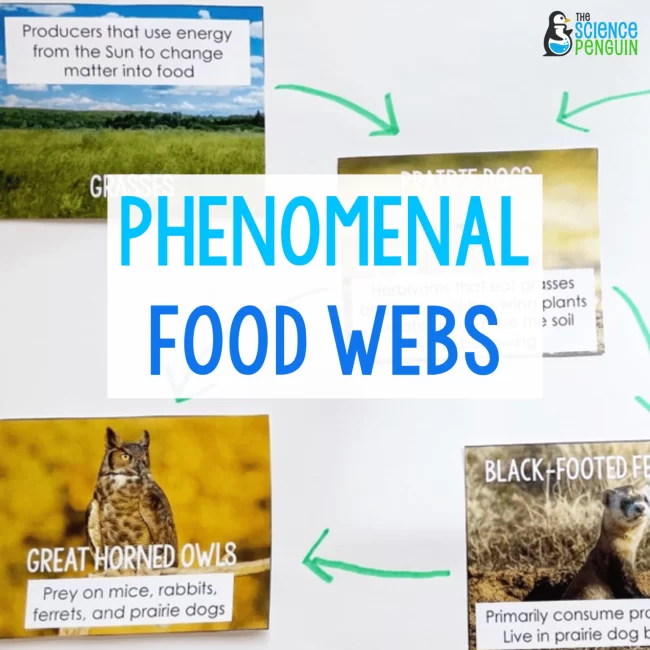
7. Teach with a Phenomenon-Based Science Unit
You can teach about food webs in a traditional way. I’ve done it and there’s nothing wrong with it! But you can add a layer of inquiry by anchoring your unit with a pretty cool phenomenon: keystone species.
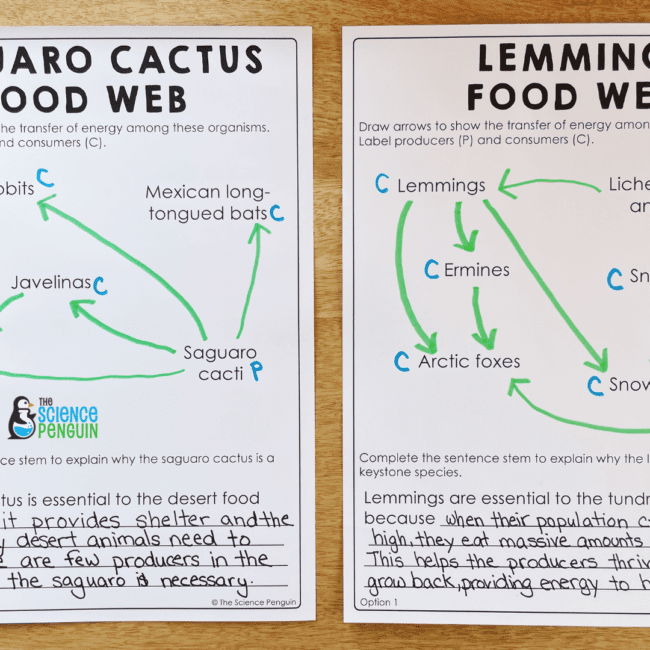
Try our 13-day, NGSS-aligned unit, “Food Webs: Phenomena-based Science.” Perfect for addressing NGSS 5-PS3-1, this unit focuses on the big question: How can a single species impact an entire food web? Students will explore this through activities like Yellowstone exploration and team challenges on keystone species.
“I truly felt like I didn’t understand ecosystems and interactions in the ecosystem well enough to teach my kids effectively. This resource not only made my life as a teacher easier, but it taught me at the same time! My kids were highly engaged and learned more than any previous class. Thank you!” -Mikey D.
Learn more about this unit in a detailed blog post: Phenomenal Food Webs
See it on TPT: Keystone Species Food Webs Unit
8. Direct Teach About Food Webs
I love inquiry-based learning, but many students benefit from having someone directly teach them skills like interpreting food webs. Like long division, some things need to be explicitly taught.
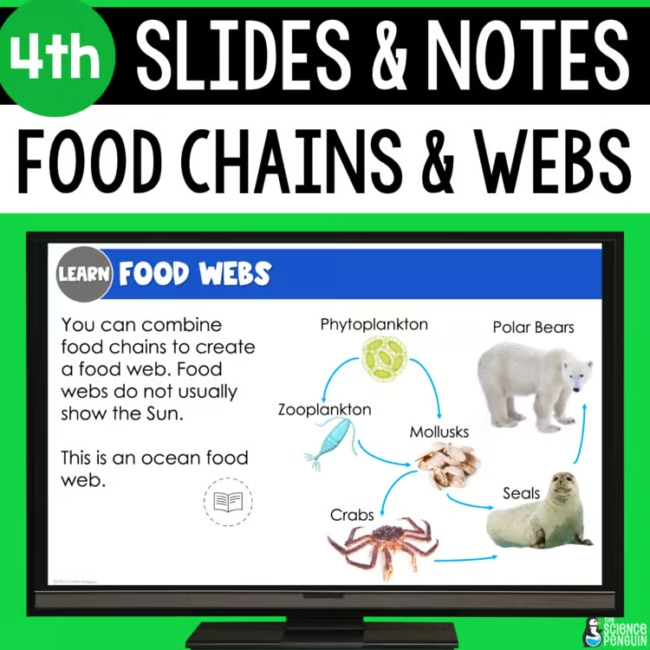
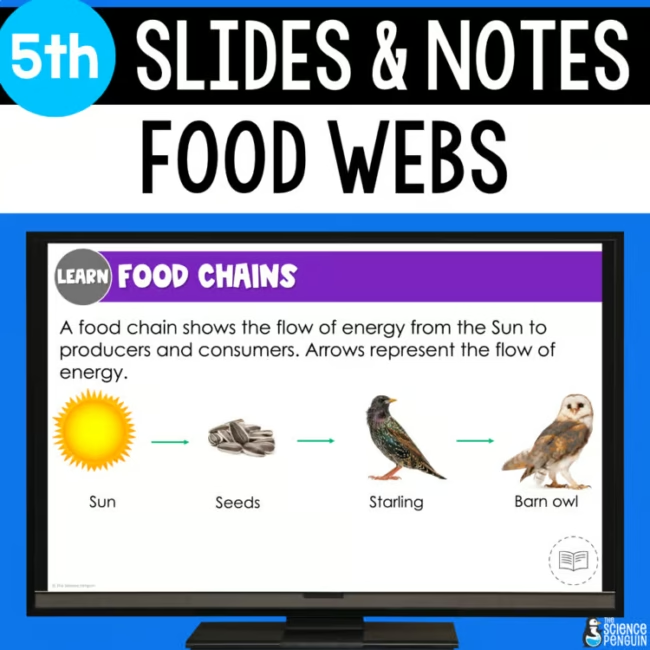
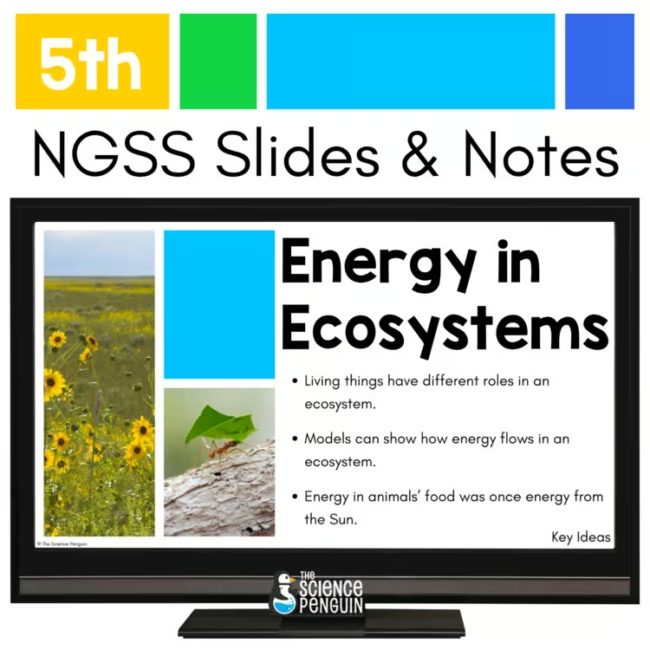
I made Slides and Notes to help you with direct instruction on how to interpret food webs.
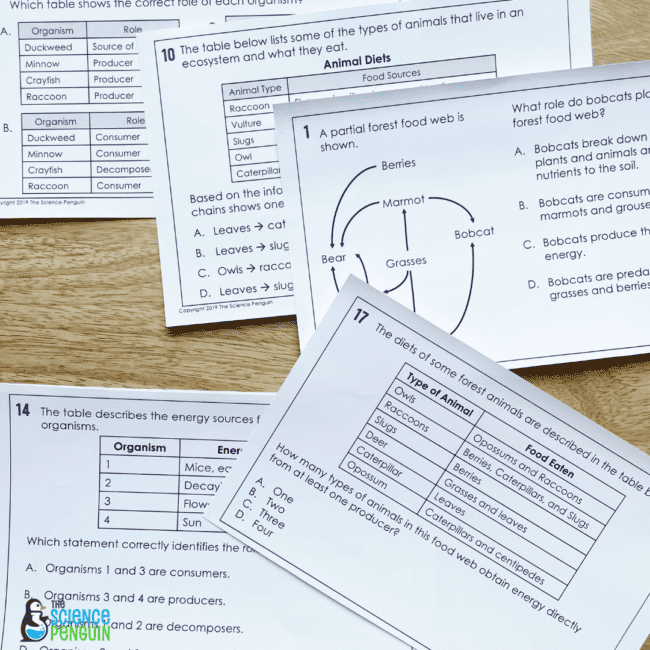
9. Assess with Food Webs Task Cards
These are not your average glance-and-answer questions. There are 20 multiple choice task cards that ask students to show their understanding of food webs and ecosystem interactions. These rigorous questions require students to analyze and interpret information to construct reasonable explanations.
Use the included Google Forms or print for games!
See it on TPT: Food Webs Test Prep Task Cards


2 thoughts on “How to Teach Food Webs: 9 Hands-on Activities for 4th grade and 5th grade”
Hi, I am currently in my last year of schooling for teaching. Science is one of the subjects that I love and I really enjoyed this blog post. I really like the first idea of having the students walk along the arrows this will appeal to the kinesthetic learners for sure. I look forward to reading more of your posts!
Comments are closed.