Mixture separation is a topic that students love because there are so many examples involving different foods, drinks, and common materials that they are familiar with! It’s easy to use these in classroom investigations where students can try separation tools and methods themselves to understand how and why they work.
5 Key Ideas
So what do 5th graders really need to know to master this topic?
They need a solid understanding of what a mixture actually is: a combination of 2 or more ingredients. Mixture ingredients retain their individual chemical properties when mixed, instead of becoming something new. Some students think that literally mixing things together always results in a mixture, and this is not true when it involves a chemical change.
They need to understand that solutions are a special type of mixture, not a totally separate concept. In 4th grade, students learn that solutions are mixtures in which one substance dissolves in another, but this needs review in 5th grade.
Understanding dissolving is another key here. Students need to understand that when a solute dissolves, it doesn’t disappear. It is evenly distributed into the solvent and breaks down into tiny pieces. It’s still there, just invisible to the naked eye!
They should explore separation methods according to WHY they are helpful. For instance, filters are great for separating solids and liquids. Sieves/sifters are great for separating tiny solids from larger ones, but they also work for solids and liquids. Magnets can separate magnetic items from nonmagnetic ones. Introduce each tool and method in detail; don’t assume they already know their names.
Exploring many different types of mixtures is important, too. Mixture ingredients can be any state of matter, but in 5th grade, the main focus is on solids and liquids. You sometimes see gas bubbles in examples like soda, though. Candies, trail mix, pebbles, sand, water, sugar, lemon juice, drink mix, and salt are commonly mentioned in STAAR question
Activities to Explore Mixture Separation
Here are 3 resources that will help your students practice and analyze this concept!
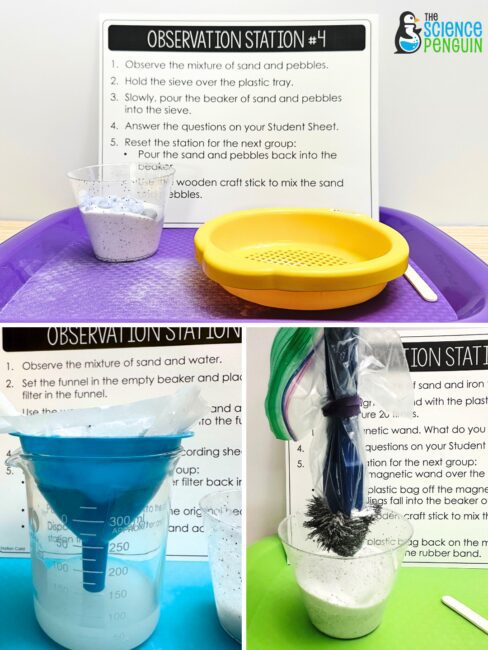
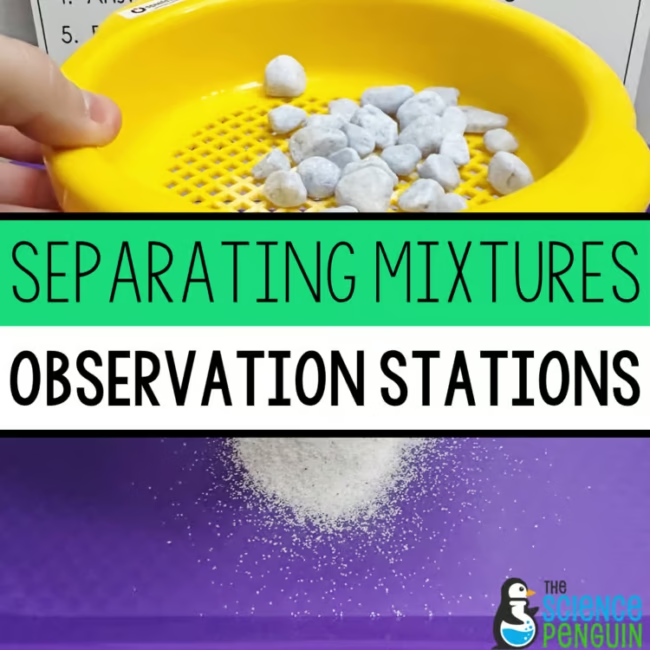
Separating Mixtures Observation Stations
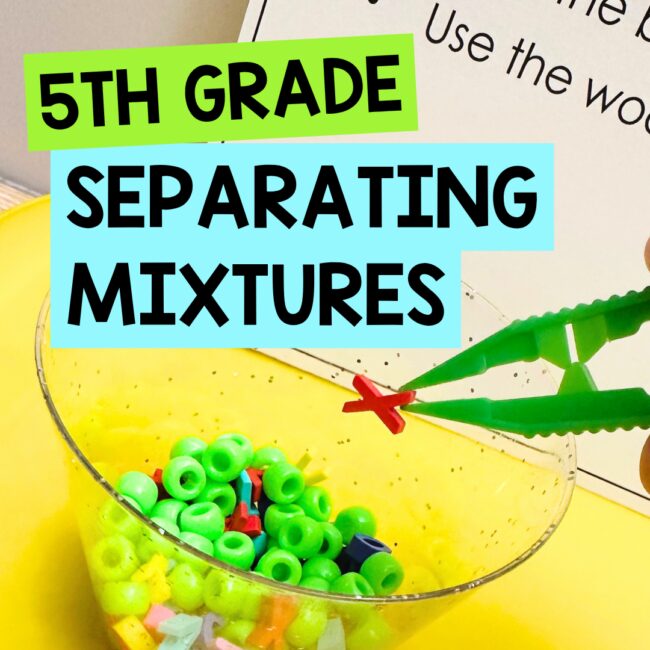
Students get hands-on with 6 different stations in this resource! They use tools like a magnet, tweezers, a sieve, and a filter. They also get to see evaporation in action and use density as a means of separation.
All of the station ingredients can be easily found in grocery or dollar stores. Students rotate through each station to investigate, then reset it for the next group to ensure easy transitions. At each station, they answer questions to analyze what occurred, and the class reflects afterward.
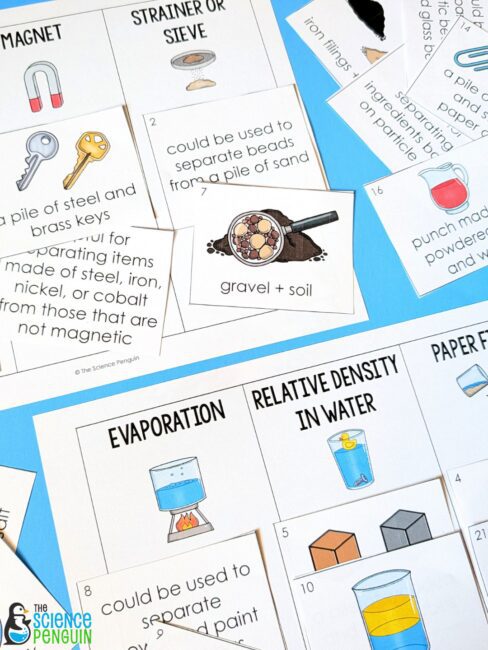
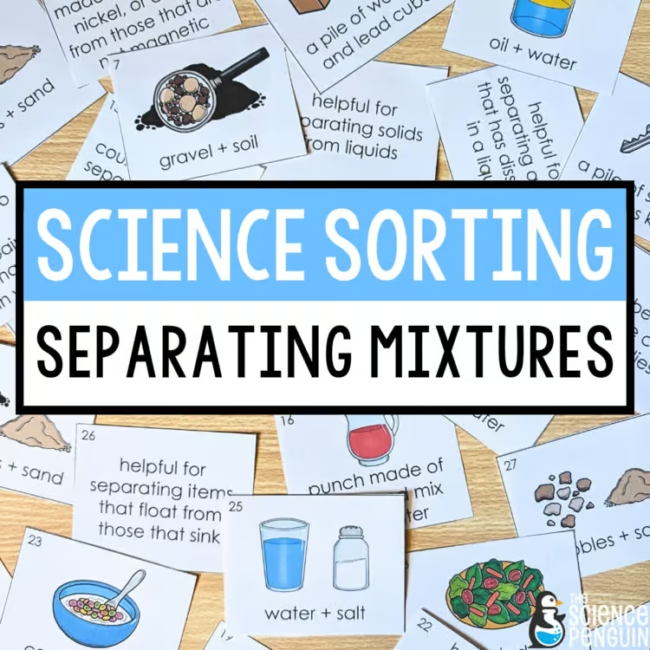
Sorting mixtures according to the best way to separate them takes practice. We’ve included 27 commonly-tested examples, along with familiar mixtures that students can easily understand.
Students can complete this sort with partners or teams, as a relay game, or even as part of a simple board game! The variety of examples provides a great opportunity to go over any misconceptions as the class reviews their classifications afterward.
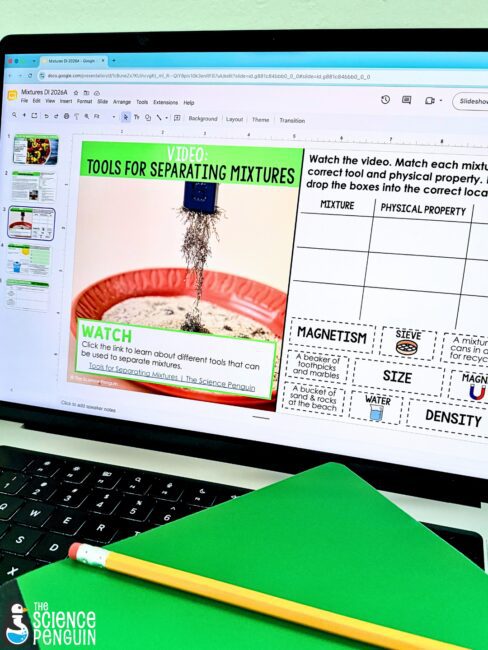
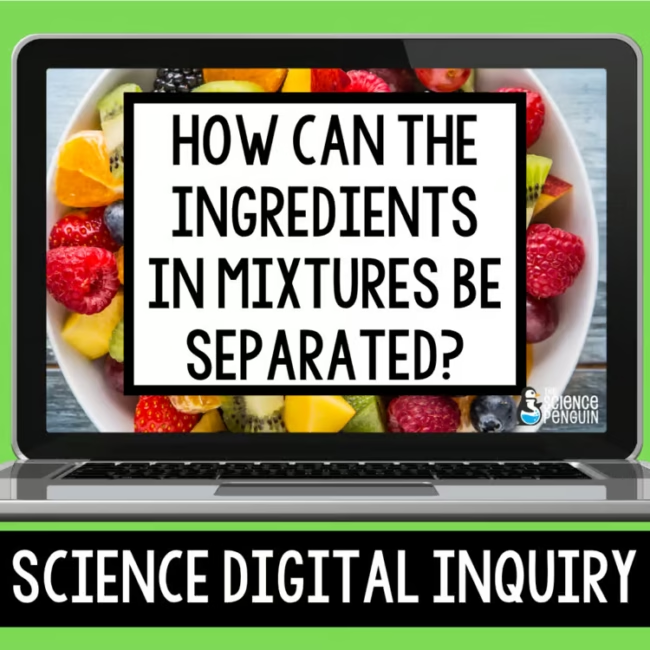
In this resource, students interact with multiple sources in Google Slides to explore an informational text, a video, and an infographic related to the separation of mixtures.
Each source slide includes questions or a drag-and-drop task to check for understanding. On the final slide, they synthesize what they learned by completing a CER to demonstrate that mixtures can be separated based on physical properties.
There are two versions of the CER to differentiate according to student needs: students can write their own or use drag-and-drop to fill in key concepts.
These tips and activities help students explore exactly what they need to master the separation of common mixtures. Analyzing properties of ingredients, using tools to separate mixtures, and seeing plenty of examples ensures a well-rounded understanding of this topic!
Top Teaching Tools
⭐️⭐️⭐️⭐️⭐️ This resource was exactly what I needed for my classroom! It was easy to use, well-organized, and my students were engaged from start to finish. The instructions were clear and prep time was minimal. I’ll definitely be using this again and checking out more resources from this seller. Thank you for creating such a helpful tool for teachers! – Caitlin P