EASY Science Lessons with Slides & Worksheet Notes
When I first started teaching science, most of what occurred in my classroom was lab-based. Students explored concepts through hands-on investigations while recording data and reflecting on their learning.
It was fun and interactive! Students loved it! But…it wasn’t always as informative as I imagined. Students were engaged, but they didn’t always retain the main information that I expected them to understand. Something was missing.
That something was direct instruction about science concepts. I’m not talking about “drill and kill” or “sage on the stage” teaching styles. Instead, this is a chance for the class to focus as they see, hear, and discuss important concepts, vocabulary, and examples related to the science topic the class is exploring.
After that year, I began implementing purposeful direct instruction about each standard using informative slideshows while students took basic notes for accountability. I found that by giving them a clear explanation and incorporating in-depth discussions about the content, they could internalize the material so much better. I definitely didn’t eliminate the hands-on investigations; I just made time for direct instruction as well to solidify that learning.
The result? Scores dramatically improved, but more importantly, students had a much deeper understanding of each topic!
What are Science Penguin Slides and Notes?
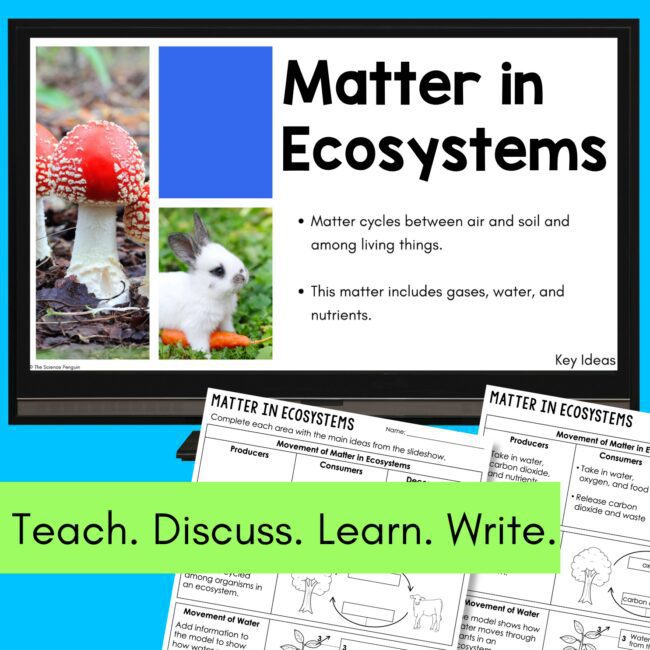
Science Penguin’s Slides and Notes are designed to give you an opportunity for that important direct instruction piece, which is vital for the Tier 1 instruction that all students receive. They help to ensure that students understand the major concepts, vocabulary, and examples about each standard.
Each set includes:
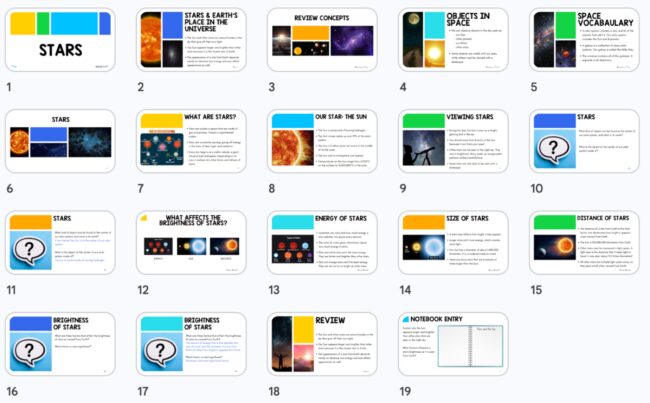
An informative slideshow full of vocabulary definitions, concept explanations, and examples
Differentiated student notes to help students follow along and stay accountable
Discussion questions that provide an opportunity to check for understanding
A notebook prompt to summarize or take the topic further
Using Slides Effectively
So, how can you get the most bang for your buck using Slides & Notes? Here are some tips!
1. Incorporate discussion
These are not designed to be used as a teacher-only resource. As you go over each slide with students, stop and ask clarifying questions. Examples might include:
“When have you seen this happen before?”
“Can you think of another example?”
“What do you notice about this?”
There are also discussion questions purposefully built in, which allow students to turn and talk with teammates before sharing out thoughts with the group!
2. Choose the correct notes page for students
Each set includes 2 or 3 options to accommodate different learners.
In 3rd-6th TEKS, most students will be able to use the fill-in-the-blank version.
In 3rd-5th NGSS, most students will be able to use the outline style version.
In all versions, you can use the filled-in version for students who need completed notes as an accommodation.
In 3rd-5th TEKS, you can use the mostly blank versions if you want students to put all of the main concepts in their own words. This option is great if you have extra time!
Students can add these pages to their binder or glue them into their science notebook.
3. Take it further
The reflection prompt near the end of each set of Slides & Notes is a great way to take the concept further. These invite students to summarize, provide their own examples, create diagrams, or expand upon the main topic. You can even share student responses on the document camera and discuss different ways that they have approached the task!
4. Let it serve as an ongoing resource
The lesson in which you go over the slideshow with students doesn’t have to be the last time that they see it. You can post it to your Google Classroom (or a similar learning management system) as a resource for later review.
You could also go back over the slideshow before an assessment to review concepts together! Consider letting students use their notes pages as resources during other class activities, too.
5. Consider the timing within your unit
Slides & Notes don’t need to be introduced on the first day of a given unit. In our Planning Guides, they sometimes are and sometimes are not. It is sometimes a great idea to have students engage in an activity that sparks their curiosity and gets them hooked before revealing specific terminology.
This is part of the 5E model: Engage, Explore, Explain, Elaborate, and Evaluate. Slides & Notes would be considered part of the “Explain” step. Of course, there are exceptions, such as when knowing the vocabulary and concepts beforehand would help students better engage with a more complex investigation, or when a slideshow features review material that needs to be covered before moving deeper. It just depends on the topic!
Explore Science Slides Options
We’ve created these for 3rd-6th grade TEKS and 3rd-5th grade NGSS. The styles vary slightly, but they all accomplish the same goal: helping students understand the main concepts of a given standard.
Texas TEKS
Next Generation Science Standards
“I LOVE this resource! As a new to 5th grade teacher, this resource has saved me. I use a daily slideshow in my classroom and was looking for a resource that had slides ready to go. I was so excited to see SciencePenguin had this resource. She’s a trusted author for me and as a new science-only teacher, I knew I could count on her science expertise while I re-learn some concepts.”
I have the interactive notebook bundle, but really appreciate the quicker note format this resource offers. The completed note page has also been a time saver with so many kids out sick this year and for those students who have class notes accommodations. I cannot say thank you enough for this resource!” -Jessica B
“I absolutely LOVE this resource!! Not only did it get my students talking about what they saw– they incorporated vocabulary and past knowledge to tie into this resource!” -Monica M
All of these options are perfect for ensuring that students have an opportunity to learn about and discuss each science standard by exploring vocabulary, explanations, and various examples. Remember that direct instruction can help students retain needed information, leading to greater understanding!