Have you ever looked back on your student teaching experience and cringed? I have! When I was first placed in charge of a classroom, I felt like I needed to stick to a script so that students would hear what I needed them to learn.
However, it seemed like half of them were totally zoned out when I was presenting a concept. I remember explaining photosynthesis and feeling like I was talking to the wall. Needless to say, it wasn’t a positive experience for anyone involved.
Fast forward a few years, and teaching about the same topic resulted in far more engagement. The students learned everything they needed to know about photosynthesis, and it felt more like we were all involved in the learning together rather than me performing for an audience.
Why was that?
Besides obviously becoming more comfortable with teaching itself, I also learned along the way that direct instruction doesn’t mean that the teacher does all the talking while students listen passively.
I developed a few strategies that increased engagement and student involvement, leading to more learning!
Let’s get into these strategies so you can learn from my mistakes!
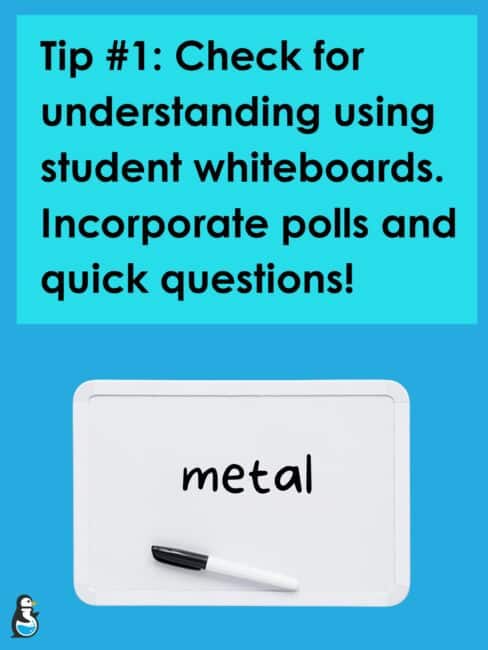
1. Check for understanding often
I liked to do this by having whiteboards and markers in a bin at team tables so they could grab them easily. During a presentation, you can incorporate polls or questions with simple answers so that students can hold up their boards for a quick check-in.
Doing this keeps students from falling through the cracks if they misunderstand something, so you can clear it up easily before misconceptions continue!
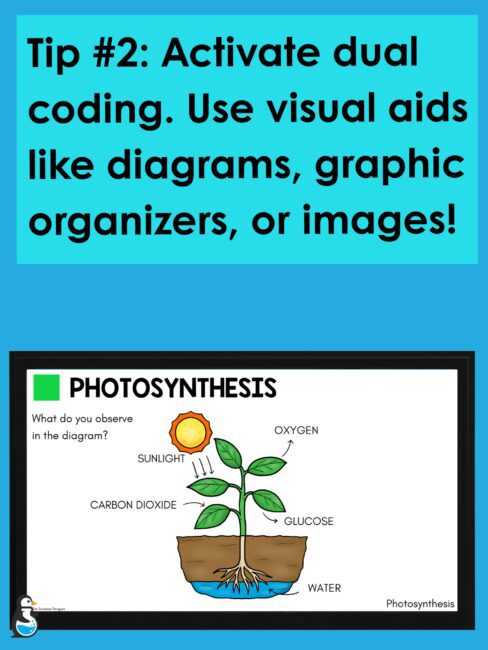
2. Use visual aids for dual coding
Make sure to incorporate graphic organizers, diagrams, or images whenever possible to represent concepts or important vocabulary.
This gives students two pathways to the same idea. They can connect the idea both visually and verbally, which makes it more likely to be remembered!
3. Weave in a storytelling example
Throw in some tidbits about any experiences that relate to the science concept you are explaining.
This might be about a landform you visited, about how condensation from a can got your paper wet, or about how the full moon last night illuminated your backyard.
Students are more likely to make connections with real-life examples! You’ll find that by sharing your own examples, your students will begin to do the same. Allow for a little time during a presentation so that these conversations can happen.
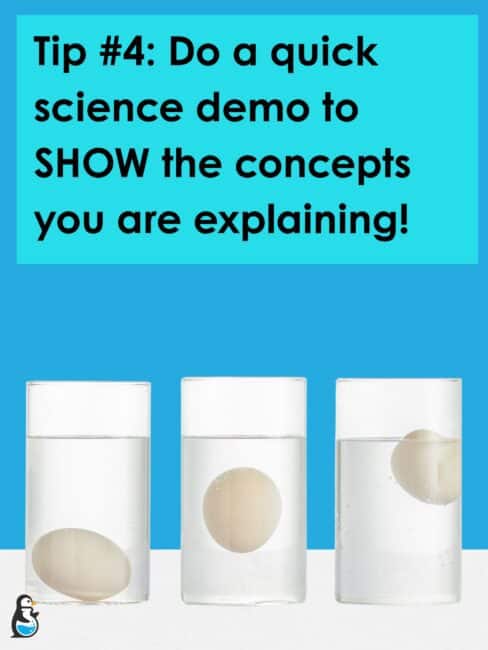
4. Provide a quick demonstration
Take a minute to literally show students what you’re talking about if the topic lends itself to it! A short demo can spark inquiry and hook students into the topic.
They are definitely more likely to remember the concept if they see something interesting that shows how or why it occurs.
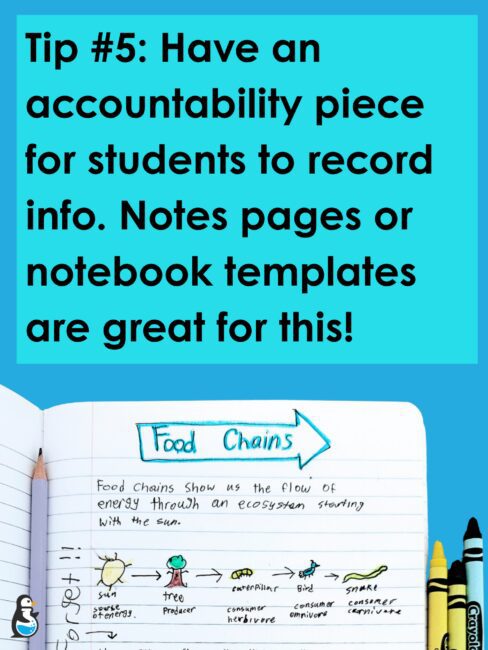
5. Include an accountability piece
Give students an opportunity to write or draw what they are learning about. This might be a note-taking sheet, a notebook template to glue in their journal, or even just creating drawings or diagrams on notebook paper.
Research shows that physically writing things down leads to greater recall than listening alone. Plus, recording their learning is helpful because they can refer to that resource later during labs or activities if needed.
All of these ideas help to get students involved in the presentation so that they retain more information. Direct instruction for elementary and middle schoolers isn’t very effective if you are just lecturing while students listen.
If you incorporate some or all of these purposeful strategies to engage students, it won’t feel like you are talking to the wall!