7 Ideas for Renewable and Nonrenewable Natural Resources

Let’s take a look at renewable and nonrenewable resources as well as how we use certain properties of natural resources to make products.

Renewable natural resources are resources that can be replenished or regenerated over a relatively short period of time. Examples of renewable natural resources include solar energy, wind energy, timber, and freshwater.

Nonrenewable natural resources are resources that cannot be easily replaced or regenerated. Examples of nonrenewable natural resources include fossil fuels  and minerals.

The main difference between renewable and nonrenewable natural resources is the speed at which they can be replenished. Renewable resources can be replenished relatively quickly, while nonrenewable resources take much longer to form. 

Here are 7 teaching ideas for natural resources!

1. 🔎 Learning about Resources

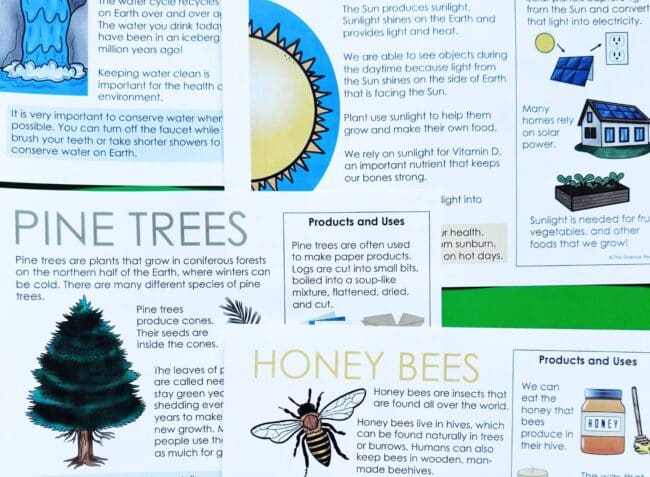
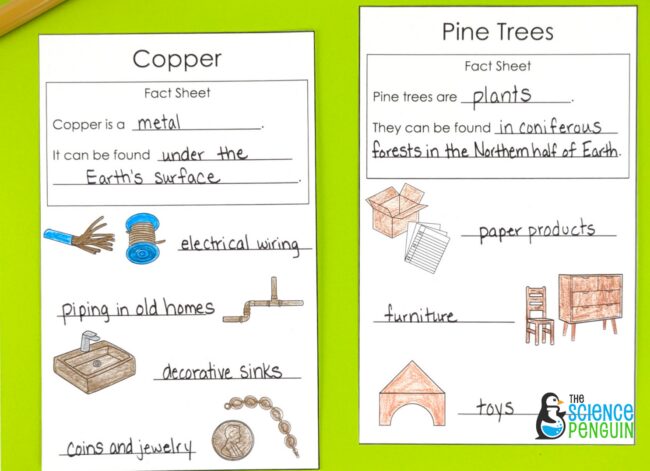
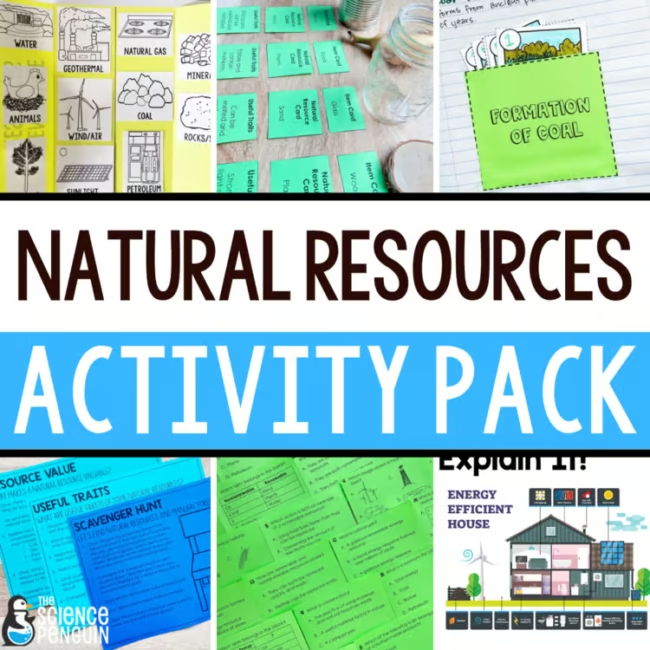
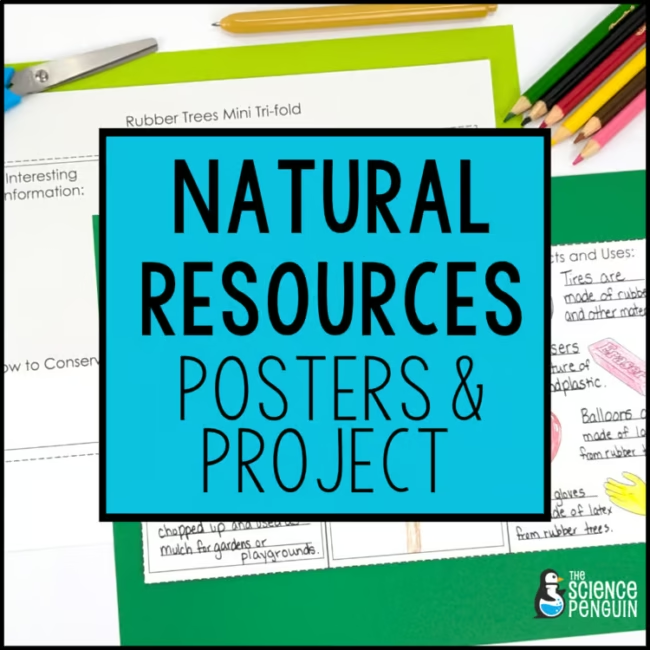
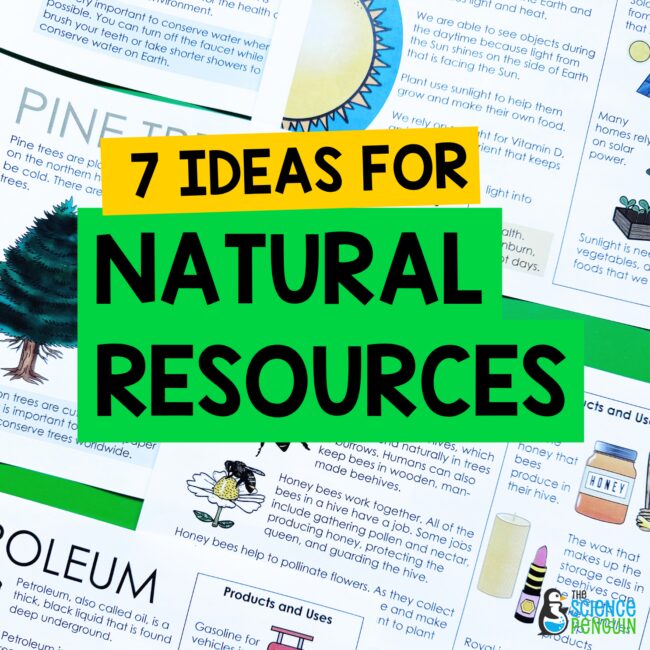
Go in-depth to learn about 10 different natural resources like water, copper, pine trees, honey bees, and petroleum.

“The posters are eye-catching and informative, making it easy for students to understand the difference between renewable and nonrenewable resources. The project component keeps students engaged and encourages meaningful discussions about conservation.”

See it on TpT: Natural Resources Posters + Project

2. 🔎 Useful Traits of Natural Resources

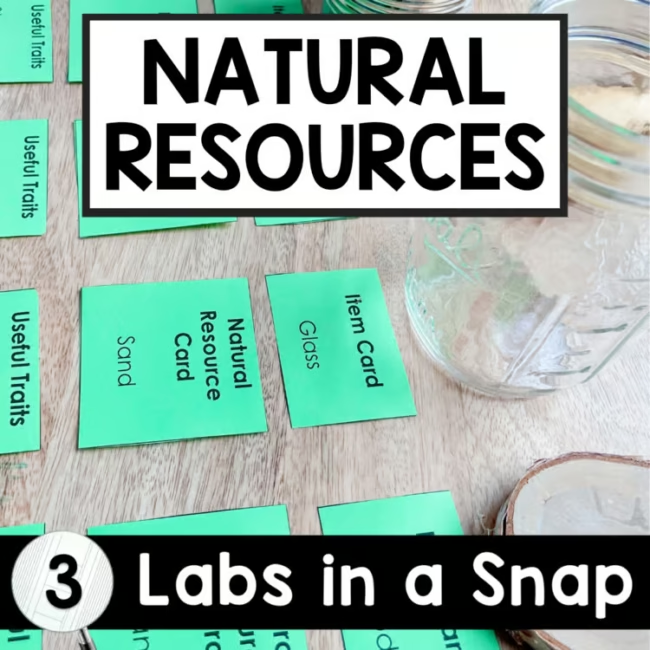
First, go on a scavenger hunt to differentiate between natural resources and manufactured goods.

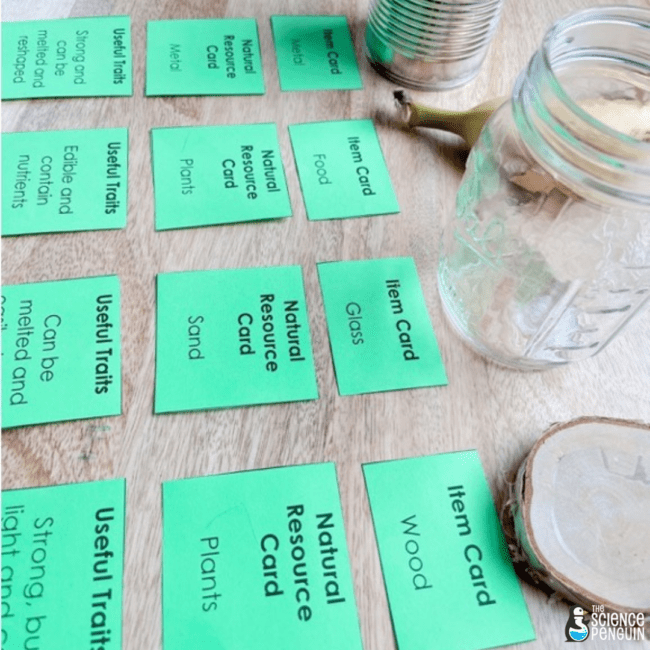
Then, explore useful traits of commonly used natural resources like wood, glass, aluminum, and fruit.

Finally, explore what it means for a resource to be considered valuable.


See it on TpT: Labs in a Snap

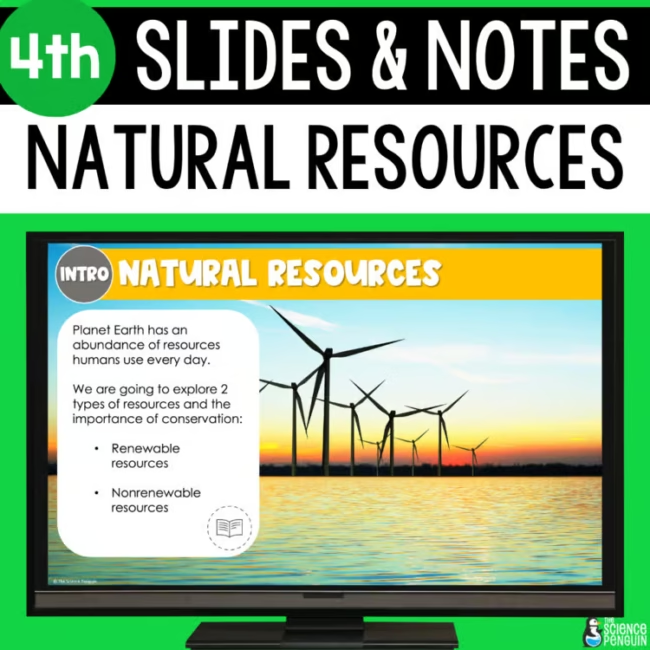
3. 📽 Slides & Notes

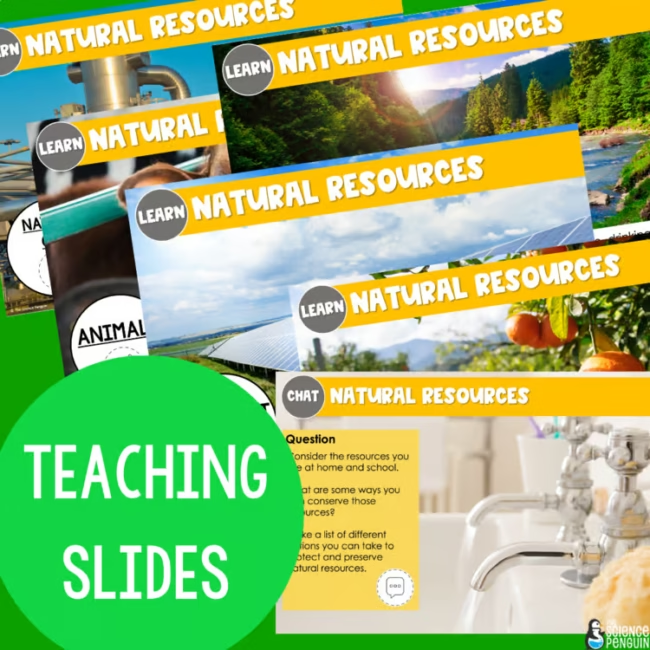
Use the provided examples and images to teach students about renewable and nonrenewable resources.

Scaffolded, differentiated notes are included!


See on TpT: Slides & Notes

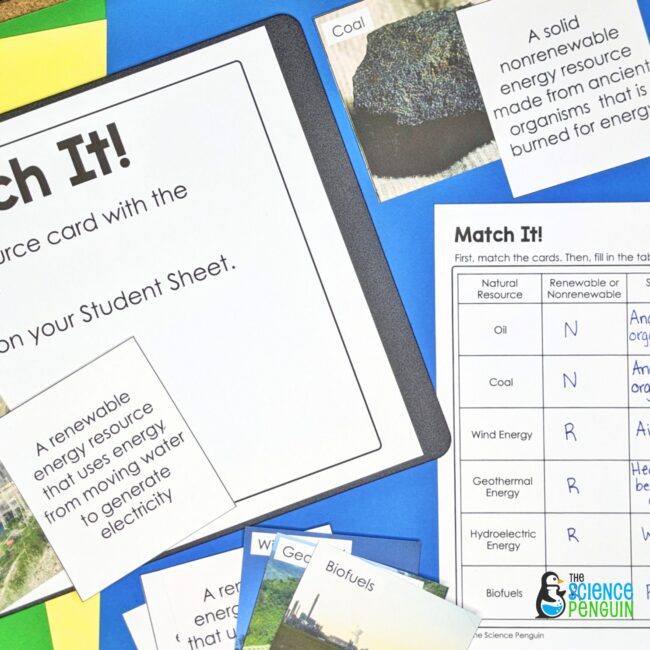
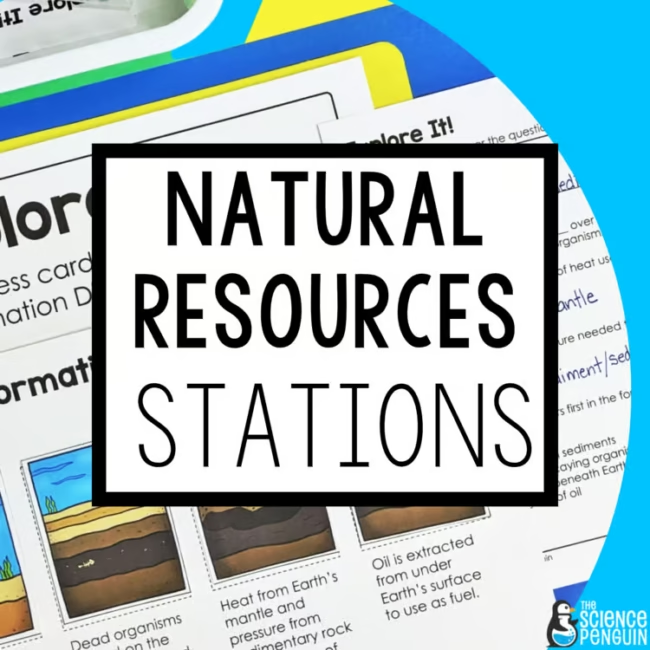
4. 💬 Stations

Read, create, match, draw, sort, sequence, explain, and analyze to review natural resources. 

“This was the first time I used stations this year and the students loved it. Everything was well organized and easy to use. “

See it on TpT: Stations

5. ❓Phenomenon-based Unit

Lead with phenomena for your natural resources unit. 

“This resource was fantastic for my students. It required almost zero prep time and fit seamlessly. The directions were clear, and the layout kept my students engaged without overwhelming them!”

Take your pick below!

3rd Grade TEKS Unit

4th Grade TEKS Unit

4th Grade NGSS Unit

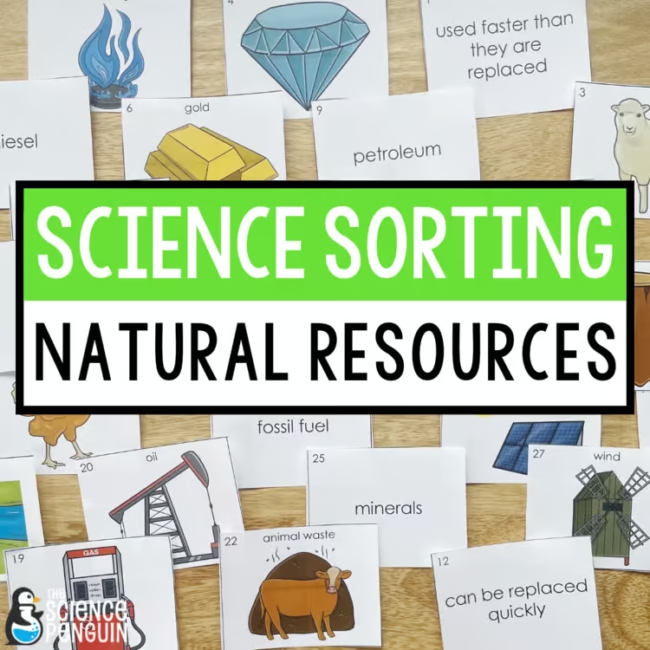
6. 📋 Sort

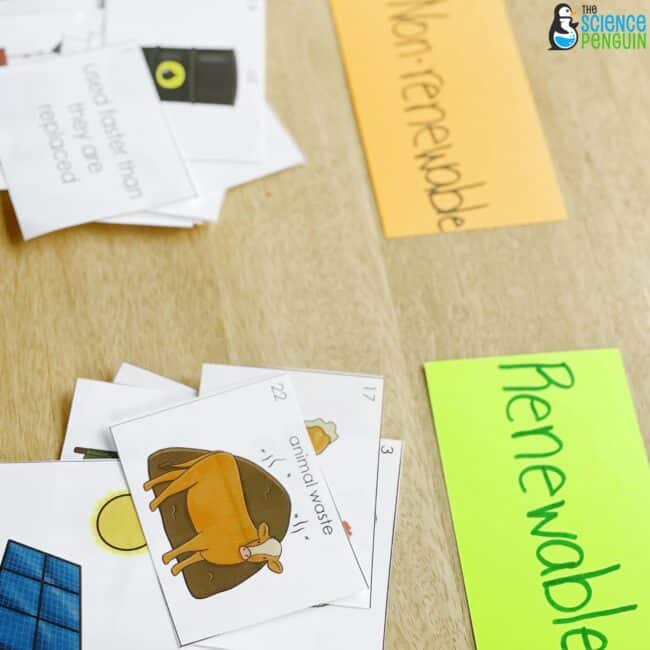
With sorts, you’ve got both academic content and opportunities for movement and teamwork. Students review by sorting images and brief descriptions related to renewable and non-renewable natural resources.

See it on TPT: Natural Resources Sort

7. 💻Critical Thinking Projects

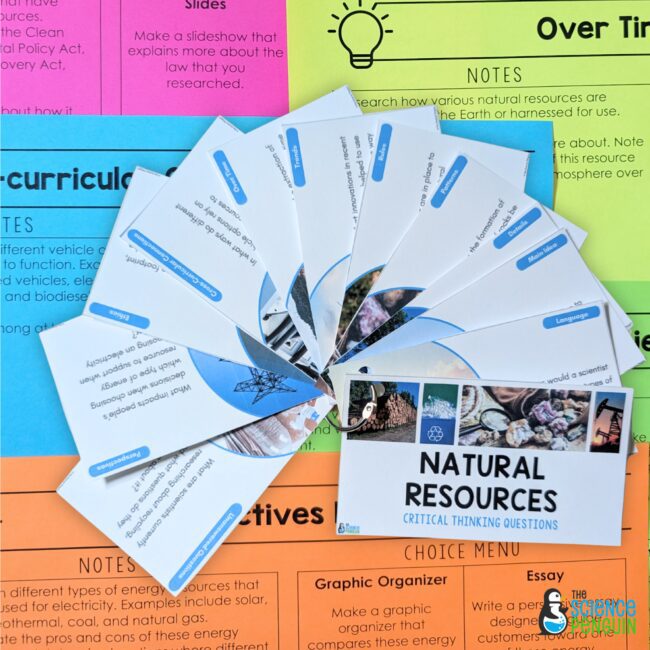
Kick off the topic with a small-group discussion, then allow students to choose the question they are most interested in for a project using a choice menu.

“I love using these during our WIN time with my GT students. They love the project choices.”

See it on TpT: Enrichment

Top Teaching Resources

TEKS 3.11A explore and explain how humans use natural resources such as in construction, in agriculture, in transportation, and to make products;

TEKS 3.11B explain why the conservation of natural resources is important

TEKS 3.11C identify ways to conserve natural resources through reducing, reusing, or recycling

TEKS 4.11A  identify and explain advantages and disadvantages of using Earth’s renewable and nonrenewable natural resources such as wind, water, sunlight, plants, animals, coal, oil, and natural gas

4.11B explain the critical role of energy resources to modern life and how conservation, disposal, and recycling of natural resources impact the environment

NGSS 4-ESS3-1 Obtain and combine information to describe that energy and fuels are derived from natural resources and their uses affect the environment.

You might also like...

Top