5 Phenomenal Ideas to Teach Light: Reflection and Refraction in 5th Grade
Let’s teach about the reflection and refraction of light for 5th grade. Even though this can be a confusing topic, your students will reach mastery in no time with these interactive activities for reflection, refraction, and absorption.
What are reflection and refraction?
I’ll be honest; before I started teaching 5th grade, the behavior of light pretty much never crossed my mind. As a 5th grade teacher, though, I think about it ALL THE TIME!
Reflection is the process by which light bounces off a surface. When light hits a reflective surface, such as a mirror or a polished metal object, the light waves bounce off the surface and return to the source. This is why we can see images in mirrors. The light waves are reflected back to our eyes.
Refraction is the process by which light changes direction as it passes through different materials. When light travels through a different material, it changes speed. This is why things often appear distorted or bent when viewed through water or a lens… the light waves are refracted as they pass through the material.
Here’s a collection of resources I’ve used to teach students about the behavior of light.
1. Light and Materials
In primary science (K-2), students learn how light from a flashlight interacts with matter.
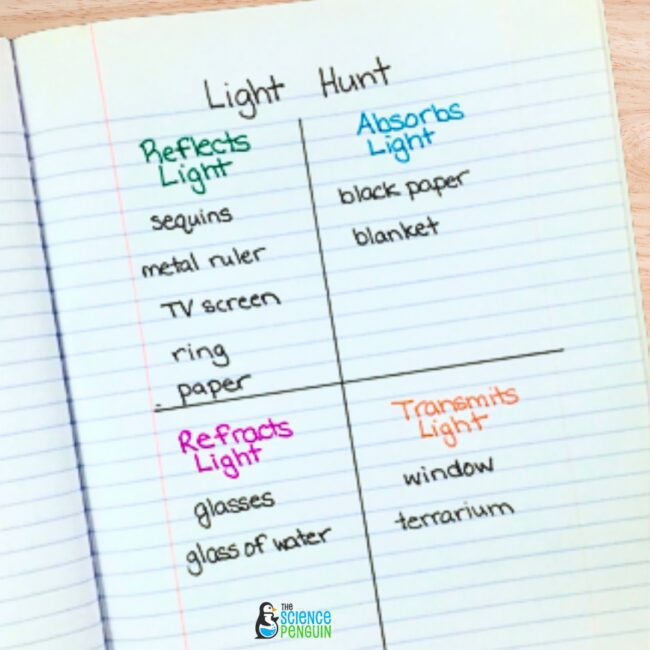
In upper elementary, students look around the room for examples of objects that transmit, reflect, refract, and absorb light.
With small groups, I’ve also reviewed reflection and refraction with a light hunt. I put a few items out around the room. After students visit and interact with those materials, they can add other items in the classroom.
After we go over how light behaves with each of the items, we discuss the following question: What do the items in each group have in common? This helps us identify similarities and tendencies in each group.
2. Light Phenomenon-based 5E Unit
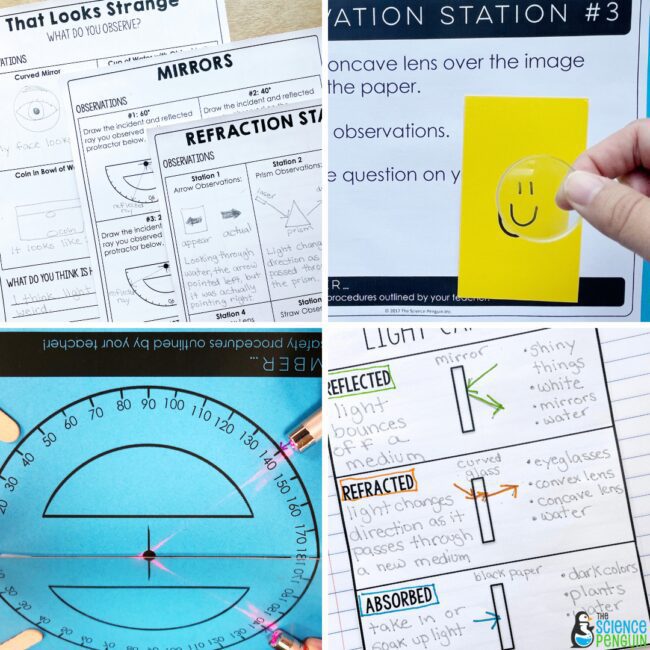
Our “That Looks Strange!” unit is perfect for helping students understand why things look strange! Explore flat mirrors, curved mirrors, lenses, water, and more to write a CER (claim, evidence, reasoning) that explains why light makes some things look strange.
Includes 5 days of 45-minute lessons:
Engage: Phenomenon video and Things That Look Strange Quick Lab
Explore: Angle of Reflection Lab and curved mirror demonstration
Explain: Read the text together, watch the video clips, and complete an entry in notebooks
Elaborate: Refraction Stations
Vocabulary: Vocabulary posters and student page
Evaluate: Support a claim with supporting evidence and reasoning in a CER
Assess: 5-question multiple choice quiz and differentiated open response prompt including Google Forms option
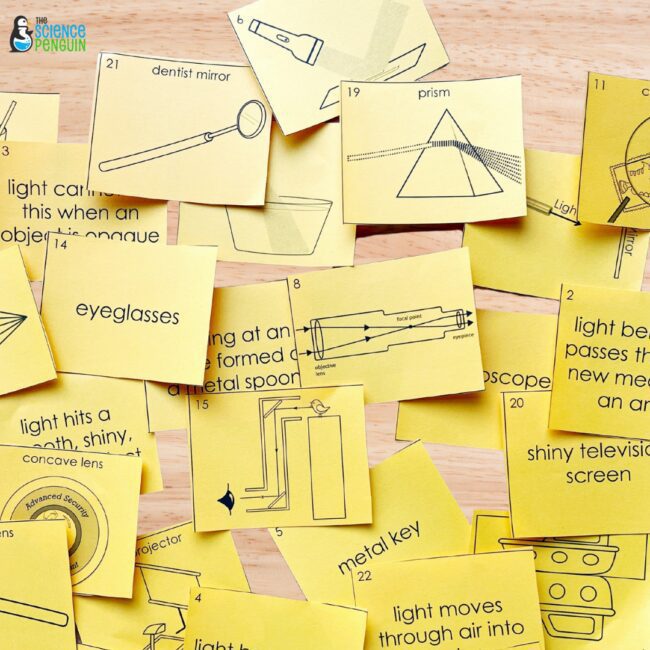
Students sort diagrams, images, examples, and descriptions as referring to reflection or refraction.
“Students were each given a set and in lab they were able to have great conversations to help clarify any misconceptions while I walked around listening and redirecting those that needed clarification.” -Monica J.
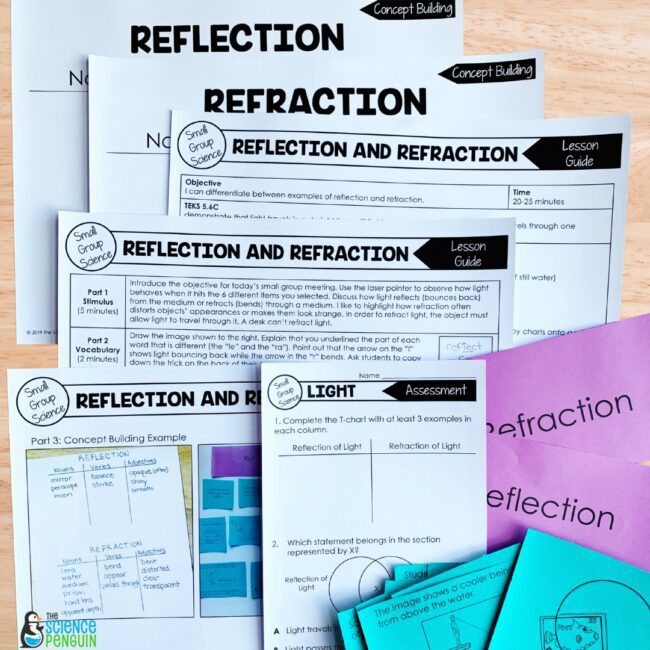
Sometimes, students need a little more support to understand what types of objects reflect light and which refract light. That’s where Small Group Science lessons come in!
Start with the stimulus and a vocabulary trick, then work through Concept Building, Sorting, and the Assessment. I think you’ll especially enjoy the sort.